
Heat recovery ventilation is a balanced system. One fan draws fresh air in from outside and another extracts stale, moist air from inside. The two airstreams pass through a heat exchanger without mixing, so warmth from the outgoing air preheats the incoming air. You get a steady supply of fresh outdoor air without throwing away the heat you paid for.
It is the system of choice for new builds, deep renovations and airtight homes, where there are fewer gaps for air to leak through on its own. If your main concern is condensation and mould in an older, draughty house, start with our home ventilation page, which covers simpler fixes first.
Pricing: every job starts with a free in-home assessment and a written quote, with a fixed price agreed before any work starts.
Comparing every option for a damp existing home, from extractor fans to positive pressure? See home ventilation.
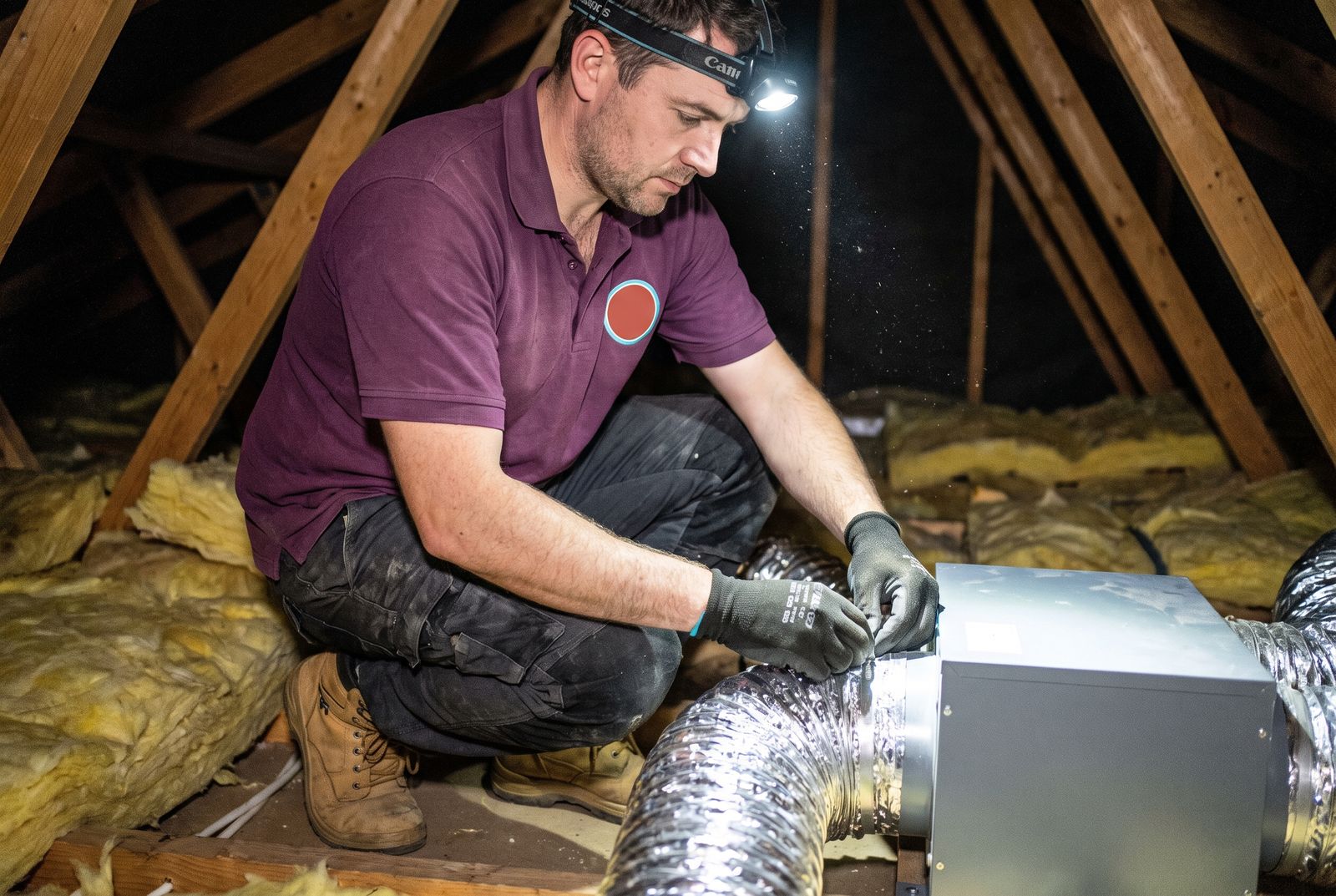
How a balanced heat recovery system works
The main unit usually sits in the roof space or a cupboard. Supply ducts deliver fresh air to living areas and bedrooms. Extract ducts pull air from wet areas such as the kitchen, bathroom and laundry. Inside the unit, a heat exchanger core transfers heat from the outgoing air to the incoming air.
Because the system brings in and removes roughly the same volume of air, the house is neither pressurised nor depressurised. That is the key difference from positive pressure systems, which push air in and rely on it leaking out through gaps. Building.govt.nz describes these systems as reducing heat losses from a building, while noting they are not heating systems in themselves.
Why airtight homes need it
Newer homes are built tighter, with better windows, wraps and sealing. That is good for warmth, but it also means less accidental fresh air. BRANZ research found that at about 5 air changes per hour at 50 pascals, typical of a new Code compliant New Zealand home, natural air leakage falls below what is needed for good ventilation, so occupants or a mechanical system have to make up the difference. BRANZ has proposed an optional target of 3 air changes per hour at 50 pascals for new homes, paired with whole dwelling mechanical ventilation.
In a tight home, a balanced system gives you controlled fresh air every hour of the day, with the heat recovered. In a very leaky home, much of the air bypasses the heat exchanger through gaps, which reduces the benefit. That is why we always ask how the house is built before recommending one.
How It Works
Design and placement
Heat recovery depends on design as much as on the box. BRANZ reports that modern units can recover around 90 percent of the heat in outgoing air, but that performance drops significantly when the ductwork and heat exchanger sit outside the thermal envelope, such as in a cold, uninsulated roof space. For new builds, the best result comes from planning the unit location and duct routes at design stage, ideally inside the insulated part of the house.
We size the system from the floor area and number of rooms, balance supply and extract airflows at commissioning, and position outdoor intake and exhaust vents apart so stale air is not drawn back in. We also look at noise: duct sizes, attenuators and fan speeds are chosen so bedrooms stay quiet at night.
- Supply outlets in living areas and bedrooms
- Extract points in the kitchen, bathrooms and laundry
- Insulated ducts, kept short and inside the envelope where possible
- Intake and exhaust vents separated on the outside of the house
- Airflows measured and balanced at handover
Costs and running costs
Balanced systems cost more than positive pressure systems because there are two fans, a heat exchanger and two sets of ducting. NZ Green Building Council figures published by ANZ put a whole house ventilation system including heat recovery at around $15,000 to $20,000 installed for an average home. That is a third party estimate, not our price. Retrofits into existing homes with difficult roof access cost more than systems planned into a new build.
Running costs come from the two fans, which run continuously at low speed and boost when needed. Filters on both the supply and extract side need cleaning or replacing, typically around once a year, and the heat exchanger core should be checked during servicing. If you also want heating, a balanced system pairs well with a ducted heat pump or high wall units.
Auckland new builds and renovations
Auckland has added a lot of terraced housing, townhouses and apartments, much of it built tighter than older stock. These homes often have small bathrooms without windows, open plan kitchens and limited cross ventilation, which makes balanced ventilation a strong fit. In a humid summer, a balanced system also brings in outdoor air in a controlled way without opening the house up to noise, insects and security worries.
For apartments, the body corporate usually needs to approve new penetrations through external walls. We provide the details they ask for. For renovations, we work with your builder or architect so ducts are run while ceilings are open.
Compliance and maintenance
Clause G4 of the Building Code requires buildings to have a way of removing moisture from cooking, washing and bathing. A balanced system with extract points in wet areas can be part of that design. For rentals, the Healthy Homes ventilation standard allows a qualifying continuous mechanical ventilation system that extracts air outdoors, with at least 12 litres per second from kitchens and 10 litres per second from bathrooms. Systems that only recirculate air do not qualify.
We commission every system, record the airflows and give you a maintenance schedule. A yearly filter change and check keeps airflow and heat recovery where they should be.
Why Choose Cheeky's Heat Pumps for Heat Recovery Ventilation
Designed, not just fitted
We plan duct routes and unit location to keep heat recovery high and noise low.
Airflows balanced
Supply and extract are measured and balanced at handover, not left at factory settings.
Works with your builder
We coordinate with builders and architects on new builds and renovations.
Heating and ventilation from one team
Pair a balanced system with a heat pump, sized together.
Heat Recovery Ventilation FAQs
What is the difference between heat recovery and positive pressure ventilation?
Heat recovery systems are balanced: they bring in outdoor air and remove stale air at the same rate, passing both through a heat exchanger. Positive pressure systems push air, usually from the roof space, into the house and rely on it leaking out.
Is heat recovery ventilation worth it in an older home?
In a leaky older home the benefit is smaller, because air escapes through gaps instead of the heat exchanger. Simpler fixes are often better value. In a tight or renovated home, it is usually a strong choice.
Does it heat my home?
No. It recovers heat that would otherwise be lost through ventilation, but you still need a heat source such as a heat pump.
How noisy is it?
A well designed system runs at low fan speed most of the time and is quiet. Duct sizing and attenuators matter, which is why we design before quoting.
Does it meet Healthy Homes ventilation rules?
A continuous mechanical system that extracts air outdoors at the required rates from the kitchen and bathroom can qualify. Recirculating systems do not.
How often do filters need changing?
Typically about once a year, more often near busy roads or building sites. We set you up with a maintenance schedule at handover.
Heat Recovery Ventilation Near You
Find your region or suburb for local heat recovery ventilation information:
Related Heat Pump Services
Heat Recovery Ventilation Guides
See the heat pump prices guide or every service we offer.