
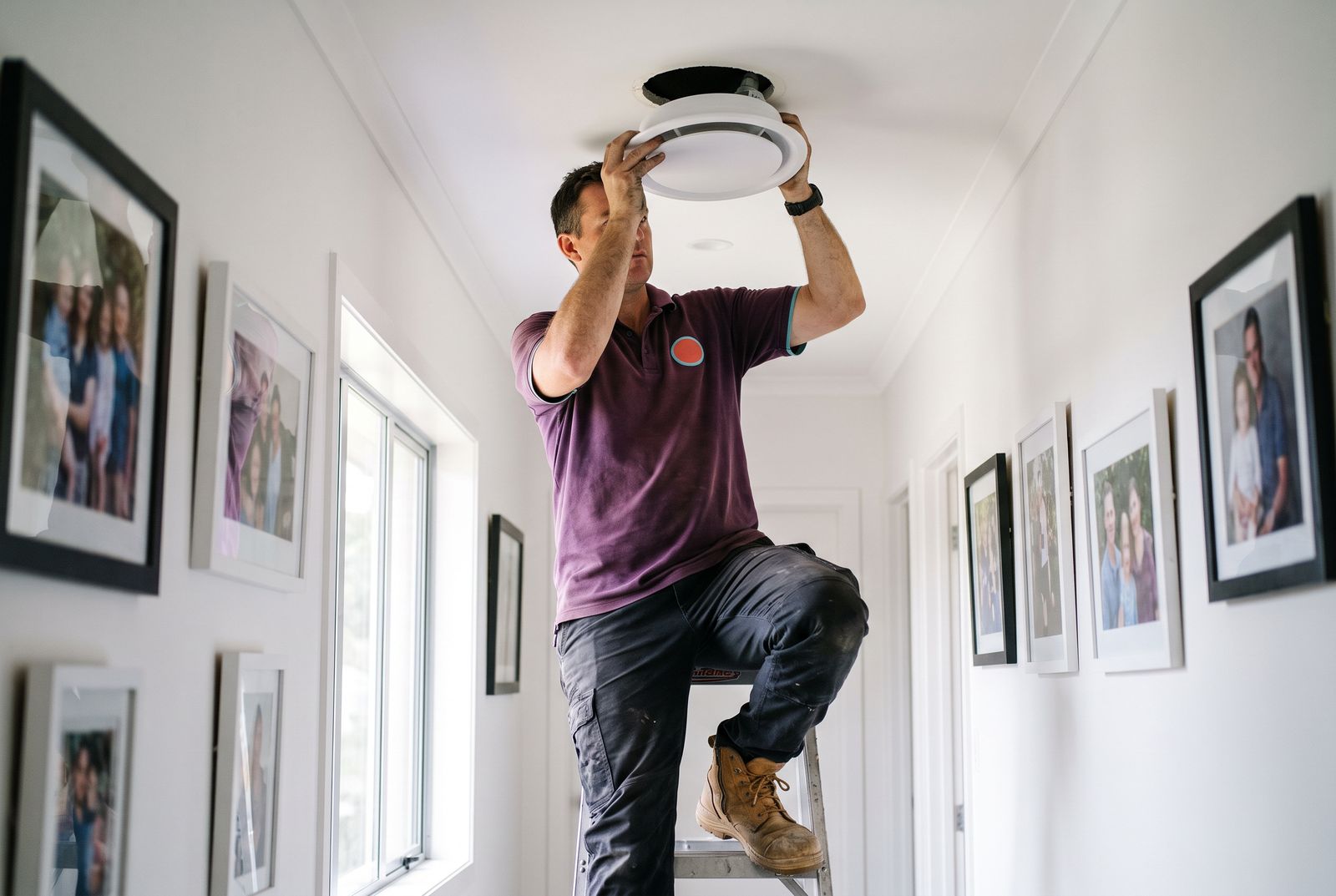
Ventilation systems are sold under a lot of brand names, and the marketing often blurs two very different designs: systems that push roof-space air into the house, and balanced systems that swap indoor air for outdoor air through a heat exchanger. Only the second is true heat recovery ventilation.
This guide explains how a balanced heat recovery system works, what NZ sources say it costs, the downsides nobody mentions in the showroom, and how to tell whether your home needs one or would be better served by something simpler.
What is a heat recovery ventilator?
A heat recovery ventilator is a fan unit, usually in the ceiling space, that runs two separate airflows at once: one extracting air from wet and living areas, the other supplying fresh outdoor air to bedrooms and living rooms. Because roughly the same volume goes out as comes in, it is called balanced ventilation.
The key part is the heat exchanger, a core of thin plates or channels where the two airflows pass each other without mixing. Warm outgoing air gives up most of its heat to the cool incoming air. The result is a steady supply of fresh, filtered air that arrives close to room temperature instead of at outdoor temperature.
It is not a heater and it is not a dehumidifier. It moves moisture out by replacing damp indoor air with drier outdoor air, and it recovers heat you have already paid for. You still need a heat source, such as a heat pump.
How does heat recovery ventilation work?
It works by exchanging air continuously and passing both streams through the heat exchanger, so you get ventilation without throwing away most of the heat. A typical system follows the same basic path.
- Extract grilles in the kitchen, bathroom and laundry draw out warm, moist, stale air.
- That air passes through the heat exchanger core and is ducted outside.
- A second fan draws outdoor air in through a filter.
- The fresh air passes through the other side of the core and picks up heat from the outgoing air.
- Ducts deliver the tempered fresh air to bedrooms and living areas.
How much does heat recovery ventilation cost in NZ?
Expect a whole-house balanced system to cost well into five figures. NZ Green Building Council figures published by ANZ put a whole-house ventilation system with heat recovery at around $15,000 to $20,000 installed for an average home.
For comparison, Consumer NZ says mechanical ventilation systems in general cost upwards of $2,000 installed, a figure that includes the much simpler roof-space systems, and the same ANZ figures put a single extractor fan at around $1,000 installed. The gap reflects what you are buying: two duct networks, a heat exchanger and more design work, against one fan pushing air through a few ceiling outlets.
Running costs are mainly the fans, plus a filter change about once a year. Those are small next to the heating energy a well-designed system saves in an airtight house, and large next to the savings in a draughty one.
Wet windows, stuffy rooms?
Cheeky's Heat Pumps can tell you whether your home needs heat recovery, a simpler system or just better extraction, and quote it properly.
Positive pressure or balanced ventilation: which is better for NZ homes?
Balanced heat recovery is better for modern, airtight homes, while positive pressure can suit older, leakier houses on a budget. They solve the same problem in different ways.
Positive pressure systems blow air from the roof space, or sometimes from outside, into the house and push stale air out through gaps. Consumer NZ notes a University of Otago study found winter roof-space air is usually colder than the air inside, and can be colder than outside on winter nights, so you may need to turn the heating up. Building.govt.nz warns that roof-space air can carry dust and mould, and that these systems must never be installed in homes with asbestos roof cladding. Our home ventilation page covers both types if you are weighing them up.
| Positive pressure (roof space) | Balanced heat recovery | |
|---|---|---|
| Air source | Roof space or outside | Outside, through a filter |
| Extracts stale air | No, pushes it out through gaps | Yes, through its own ducts |
| Recovers heat | No | Yes, BRANZ cites around 90 percent |
| Best suited to | Older homes with leakier joinery | Modern, well-sealed homes |
| Cost | Lower | Highest of the common options |
Are heat recovery systems worth it?
They are usually worth it in new or tightly sealed homes, and rarely worth it in draughty older ones. The deciding factor is how airtight the house is.
BRANZ research found that in a typical new Code-compliant NZ home, natural air leakage falls below what is needed for good ventilation, so either the occupants or a mechanical system have to make up the difference. Clause G4 of the Building Code also requires a way of removing moisture from cooking, washing and bathing. In a sealed home, balanced ventilation does that while keeping most of the heat.
That is why we see the strongest case in places like the Millwater development at Silverdale, where most homes date from the 2010s and well-sealed houses trap moisture from cooking, showers and drying clothes. It is the same story in the newer streets of Botany. In a villa with gappy sash windows, the air is already leaking out, so heat recovery has much less to recover.
What are the downsides of a heat recovery system?
The main downsides are upfront cost, the need for good design and installation, and ongoing filter maintenance. A poorly installed system can lose much of its benefit.
BRANZ notes heat recovery performance drops significantly when the ductwork and heat exchanger sit outside the insulated envelope, such as in a cold, uninsulated roof space. Ducts need to be insulated and sealed, and the airflows balanced at commissioning. Filters on both sides need cleaning or replacing, typically around once a year, and more often near busy roads. When Cheeky's Heat Pumps lays out a system, we keep the unit and ducts inside the insulated layer wherever the roof allows.
Ceiling space is another constraint. Two duct networks take room, and if you are also planning ducted heat pumps, both systems need to be laid out together so they do not fight for the same space. Finally, heat recovery is not a fix for a leaking roof, a wet subfloor or a broken bathroom fan. Those need sorting first.
When should you talk to a ventilation installer?
Talk to an installer when condensation, mould or stuffiness keeps coming back despite heating, extractor fans and airing the house. Those are signs the house needs continuous ventilation, not just more heat.
In bush-edge homes such as Titirangi, where overhanging trees keep sections shaded and damp through winter, it often makes sense to start with extraction and heating before recommending a whole-house system. Cheeky's Heat Pumps designs and installs both positive pressure and balanced systems, so we have no reason to push one over the other. You can book a free in-home assessment and we will look at the house, the roof space and how you live before suggesting anything.
Frequently Asked Questions
Can a heat recovery system cool my house in summer?
Not in the way a heat pump does. Many units have a summer bypass that sends fresh air around the heat exchanger so you are not recovering heat you do not want, which helps on cool evenings. On a hot Auckland afternoon you still need a heat pump or air conditioner to bring the temperature down.
Does heat recovery ventilation stop mould?
It reduces the conditions mould needs by removing moisture continuously, which helps a lot in sealed homes. It will not fix mould caused by a roof leak, rising damp or a blocked gutter, and existing mould still needs cleaning. Pair it with steady heating so surfaces stay warmer than the dew point.
How noisy is a heat recovery system?
A well-designed system is quiet because the fans run at low speed most of the time and the unit sits in the ceiling space. Noise usually comes from undersized ducts, a unit mounted without isolation, or a fan running on boost. Ask your installer for the design airflow and the boost setting.
Can I retrofit heat recovery into an existing house?
Often, if there is enough ceiling space for two duct networks and the house is reasonably airtight. Single-storey homes with an accessible roof space are the easiest. In a draughty older home, sealing gaps and improving extraction usually come first, because heat recovery works best when air goes through the system rather than around it.
Does a heat recovery system replace my bathroom fan?
It can, if it extracts from the bathroom at a high enough rate. For rentals, the healthy homes ventilation standard accepts continuous mechanical ventilation that extracts at least 10 litres per second from bathrooms and 12 from kitchens. A recirculating or roof-space system does not count as extraction.
Our Services
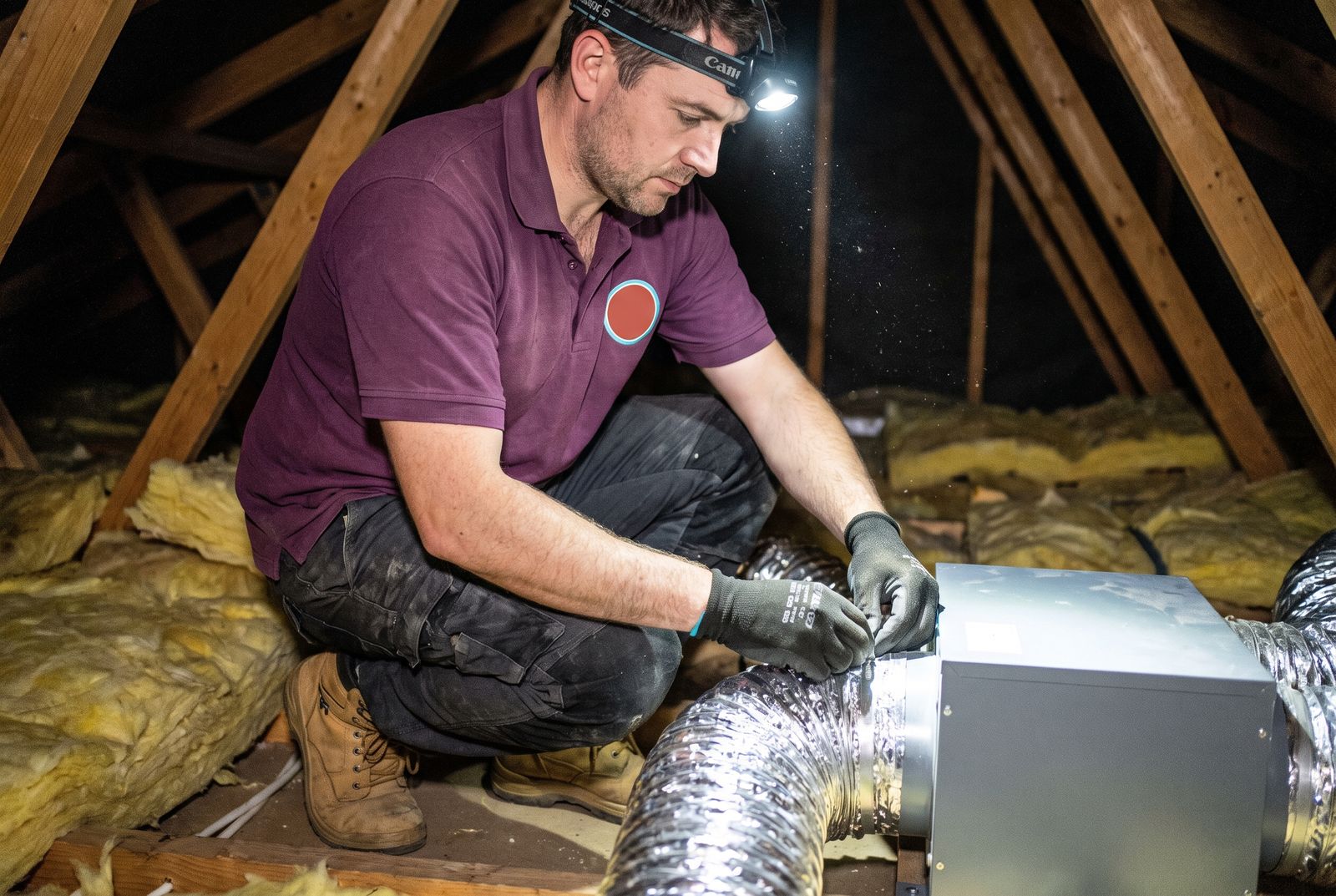 Heat Recovery VentilationBalanced ventilation that brings in fresh filtered air and recovers heat from the air going out.
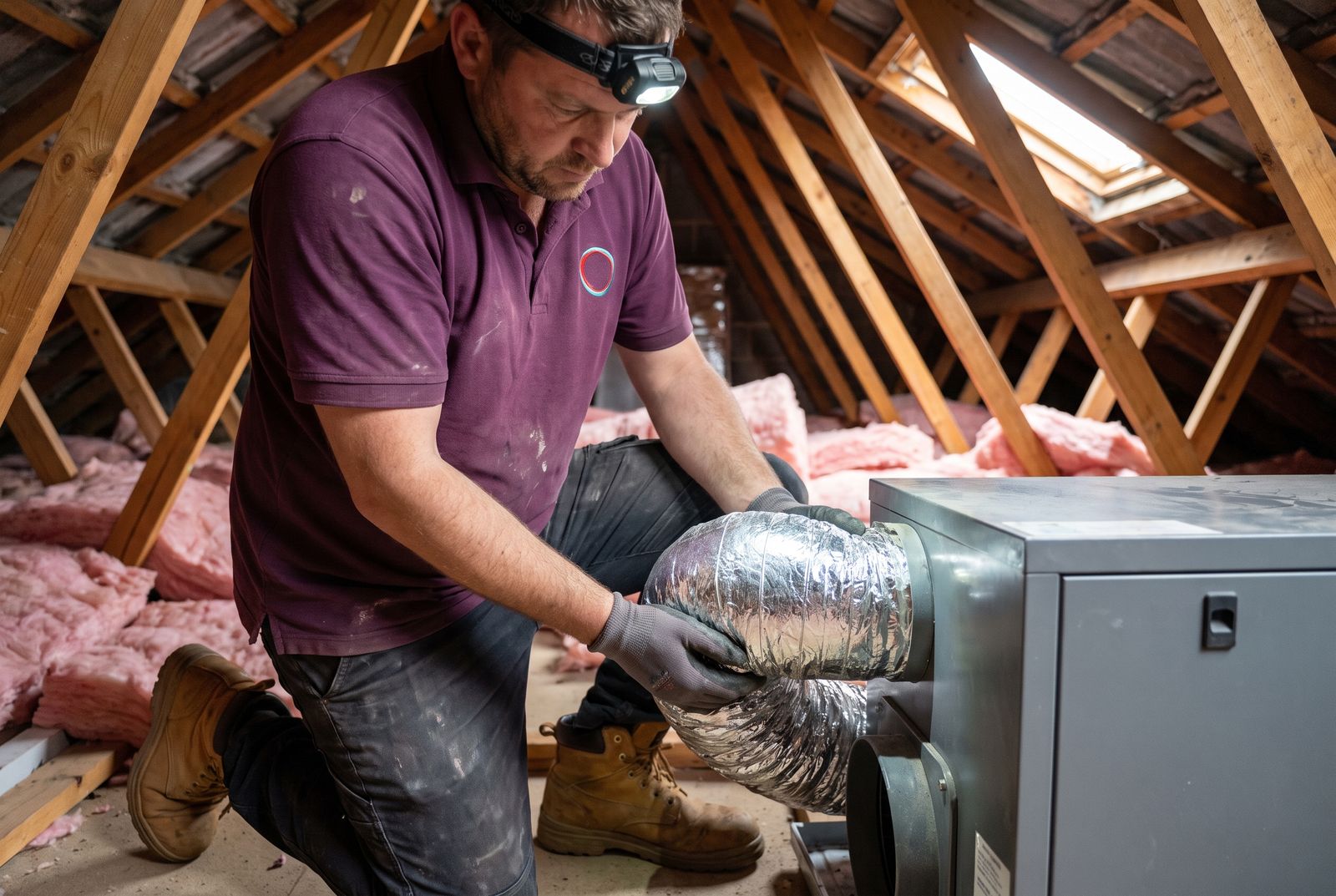 Ducted Heat PumpsWhole-home heating and cooling from a hidden central unit, with discreet outlets and zoning room by room.
Read Next
How to Stop Condensation on Windows: An Auckland Guide
To stop condensation on windows, pull three levers together: put less moisture into the air, keep rooms warmer, and move...
Read article
Healthy Homes Standards NZ: A Landlord's Checklist for 2026
The healthy homes standards are five minimum rules for New Zealand rentals: heating, insulation, ventilation, moisture i...
Read article
What Size Heat Pump Do I Need? kW by Room for NZ Homes
Most bedrooms need a heat pump of about 2 to 3 kW, a typical lounge 3.5 to 5 kW and a large open-plan living area 6 kW o...
Read article