
Under the Healthy Homes Standards, every rental must have fixed heating that can directly heat the main living room. Tenancy Services describes the target as heating the room to 18 degrees, the temperature the World Health Organization recommends. All private rentals had to comply by 1 July 2025, and breaches can bring penalties of up to $7,200.
The required heating capacity is not a guess. It is calculated with the official heating assessment tool or the formula in the regulations, based on the room, its windows, walls, floor and ceiling, insulation and the region. We do that calculation for you, check whether your current heating meets it and, if not, supply and install a heat pump that does.
Pricing: every job starts with a free in-home assessment and a written quote, with a fixed price agreed before any work starts.
What the heating standard requires
The rules are specific, and a heater that feels warm enough is not automatically compliant. In summary, from Tenancy Services:
- One or more fixed heaters that directly heat the main living room, the largest room used for everyday living
- Each heater must be at least 1.5 kW, and together they must meet the calculated required capacity
- Heat pumps and electric heaters must have a thermostat
- Open fires and unflued combustion heaters, such as portable LPG heaters, do not count
- Where the required capacity is over 2.4 kW, electric heaters other than heat pumps are not allowed, except as a top up to qualifying older heating
- Typical compliant options are heat pumps, wood burners, pellet burners and flued gas heaters
How the heating assessment works
The assessment works out the minimum heating capacity the main living room needs, shown in kilowatts and rounded up to one decimal place. The inputs are the region, the property type and when it was consented, the size of the space, every surface heat can escape through and how well each is insulated.
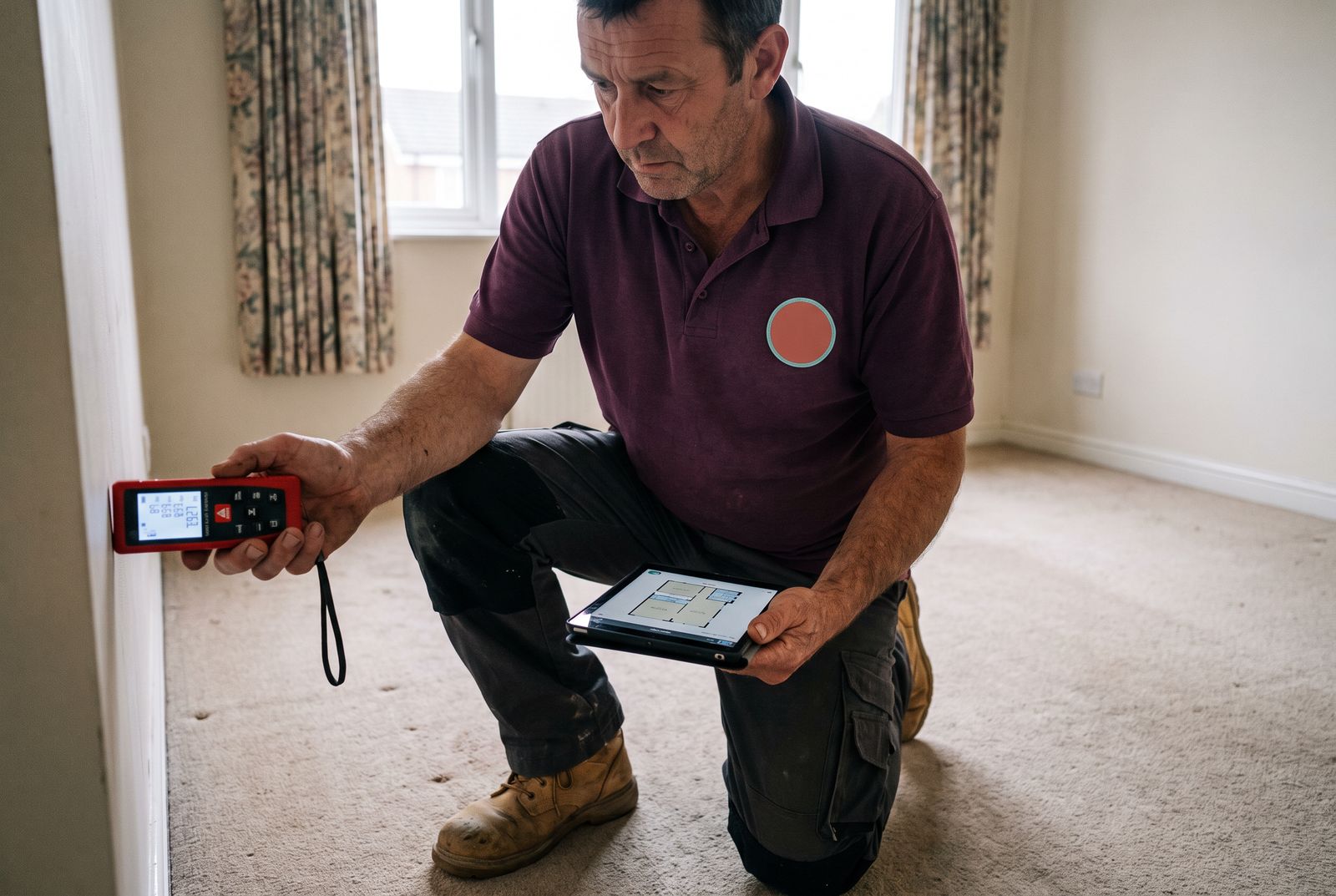
Open plan layouts are where most DIY assessments go wrong. Spaces that are always open to the living room, such as an open plan kitchen, hallway or stairwell, must be included. If a door can close between spaces, the space beyond it is left out. Tenancy Services advises professionals to use the formula rather than the online tool for complex layouts and sloped or irregular ceilings. We measure on site, handle these cases properly and give you a written report you can keep with your compliance records.
How It Works
Existing heaters, top ups and exemptions
You may not need new heating. Existing heaters installed before 1 July 2019 can count if each is over 2.4 kW, they meet the other requirements, any electric heating above 2.4 kW is a heat pump, and together they deliver at least 80 percent of the required capacity.
Where older heating falls short, a smaller fixed electric heater with a thermostat, 2.4 kW or less, can top it up. Tenancy Services gives the example of a pre July 2019 3.6 kW heat pump in a room needing 6.0 kW, topped up with a 2.4 kW heater. When that heat pump is later replaced through wear and tear, the replacement must meet the full standard.
There are limited exemptions, for example where a professional installer cannot reasonably install a qualifying heater without substantial building work. For apartments where the landlord does not own the whole building, a partial exemption can apply, requiring at least one qualifying heater of 2 kW or more. HUD has also updated the rules for newer homes built to 2008 insulation and glazing standards and some larger apartments. We will tell you which rules apply to your property.
Costs: assessment and installation
We give you a fixed price for the heating assessment before we start. If the existing heating complies, you get a written report and you are done. If it does not, we recommend the right size heat pump and quote for supply and installation. Because the assessment gives an exact kW figure, you avoid paying for an oversized unit and avoid the risk of an undersized one.
Heat pumps are usually the most cost effective way to meet the standard in Auckland rentals, and tenants benefit from lower running costs than plain electric heaters. Our heat pump prices guide covers typical installed costs, and most living rooms suit a high wall heat pump.
Auckland rentals in practice
Auckland's rental stock ranges from villas with high ceilings and big sash windows to 1970s brick and tile units and modern apartments. High ceilings and large areas of single glazing push the required capacity up, so older villas often need more than the owner expects. Open plan townhouses often need a bigger unit than the lounge alone suggests, because the kitchen and stairwell count.
Apartments add another layer: outdoor unit placement usually needs body corporate approval, and some buildings have rules about where units can go. We work with property managers and body corporates across the region and can book installs between tenancies.
Records, servicing and the rest of the standards
A full healthy homes assessment covers all five standards: heating, insulation, ventilation, moisture ingress and drainage, and draught stopping. We assess and install for the heating standard and the extraction part of the ventilation standard, and the Tenancy Services healthy homes guidance sets out what the other three require.
Landlords must include a statement of their compliance with the Healthy Homes Standards in most new or renewed tenancy agreements, and must be able to show how they comply. Keep the heating assessment report, the heat pump specifications showing its heating capacity, and the installer's paperwork, including the electrical certification, together.
Heating must keep working throughout the tenancy. A regular heat pump service keeps it performing and gives you a dated record. The ventilation standard also requires kitchen and bathroom extraction that vents outside; if you need that sorted too, see our home ventilation page.
Why Choose Cheeky's Heat Pumps for Healthy Homes Assessment
Measured on site
We measure the room and every surface ourselves, including open plan spaces the online tool trips people up on.
Exact size, not oversized
The unit we recommend matches the calculated kW, so you meet the standard without overspending.
Paperwork you can file
Written assessment report, heater specifications and electrical certification, ready for your records.
Built for property managers
Tenant liaison, installs between tenancies and one point of contact for multiple properties.
Healthy Homes Assessment FAQs
What temperature does the heating standard require?
The heating must be able to heat the main living room to 18 degrees, the temperature recommended by the World Health Organization. The required capacity is calculated for your room and region.
Can I use the online heating assessment tool myself?
Yes, it is free on the Tenancy Services website. It works well for simple rooms. For open plan layouts, sloped ceilings or irregular rooms, a professional assessment using the formula is more reliable.
Does a portable heater count?
No. Heaters must be fixed. Portable LPG heaters and open fires are not allowed.
My heat pump was installed before 2019. Is it compliant?
It can be, if it meets the requirements and provides at least 80 percent of the required capacity. If it falls short, a small fixed electric top up heater may be enough.
Which room is the main living room?
The largest room used for everyday living, such as a lounge, family room or dining room, including spaces that are always open to it.
What happens if I do not comply?
Not meeting the standards is a breach of the Residential Tenancies Act, with penalties of up to $7,200.
Healthy Homes Assessment Near You
Find your region or suburb for local healthy homes assessment information:
Related Heat Pump Services
Healthy Homes Assessment Guides
- Home Ventilation Systems in NZ: Cost and Which Type to Choose
- Healthy Homes Standards NZ: A Landlord's Checklist for 2026
See the heat pump prices guide or every service we offer.