
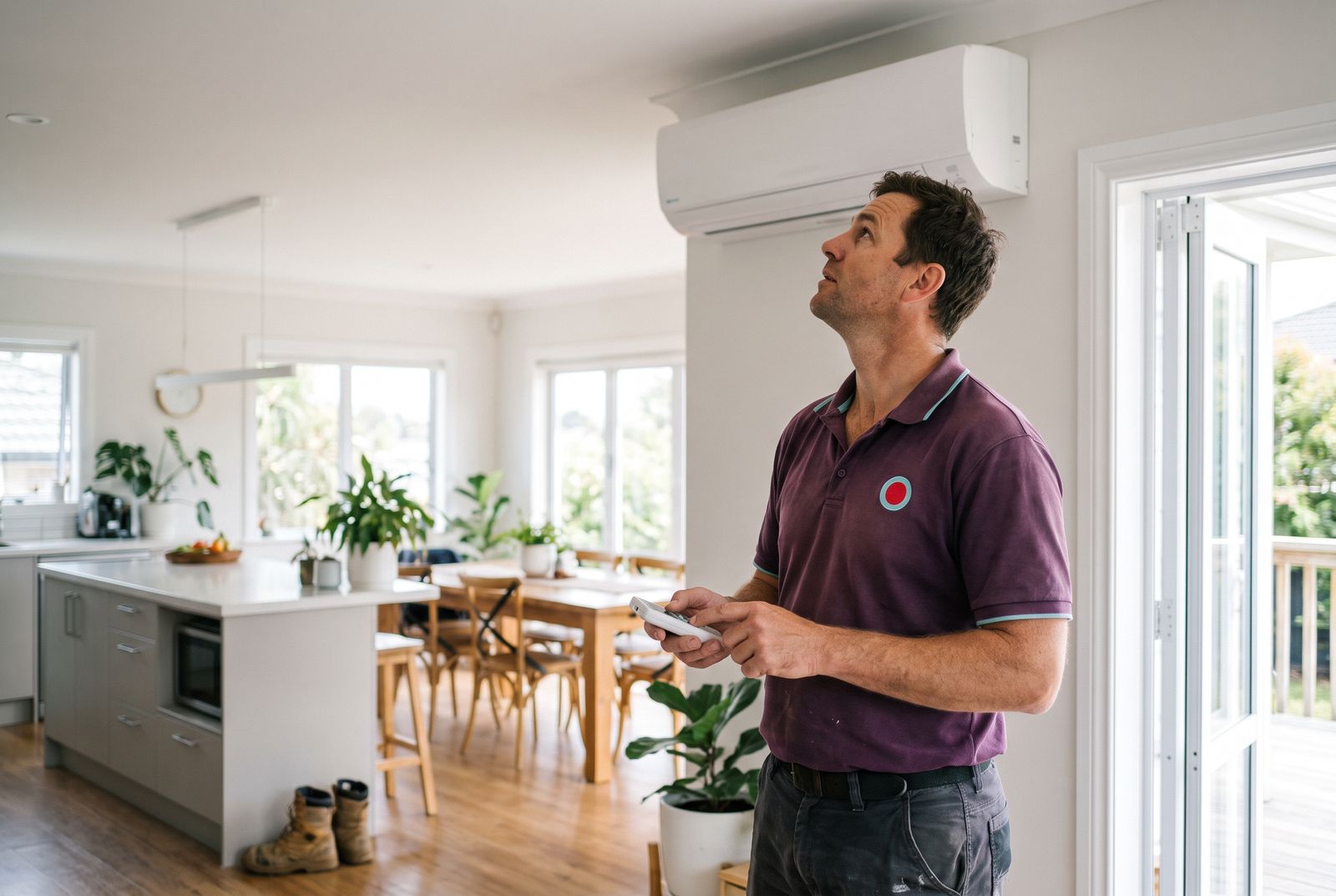
Most landlords know the standards exist. Fewer are sure their property still meets every one of them, especially after a heat pump has aged, a bathroom fan has died or a tenancy has turned over. This checklist walks through all five standards, then goes deeper on the two that cause the most questions: heating and ventilation.
We focus on the parts we work on every week, the healthy homes heating assessment and fixed heating, but we also cover insulation, moisture and draughts so you can see the whole picture. Everything here is summarised from Tenancy Services and should be read alongside its guidance.
What are the healthy homes standards?
The healthy homes standards are minimum requirements for rental homes under the Residential Tenancies Act, set out by Tenancy Services in five parts. Together they are meant to make rentals warmer and drier.
Each standard has its own detail and exemptions, and a property has to meet all five. The table below is a quick checklist. It is a summary, not legal advice, so use the Tenancy Services pages for anything borderline.
| Standard | What it requires (summary) |
|---|---|
| Heating | Fixed heating that can heat the main living room to 18 degrees |
| Insulation | Ceiling and underfloor insulation, with minimum R-values for most homes |
| Ventilation | Openable windows in habitable rooms, plus extractor fans in kitchens and bathrooms |
| Moisture ingress and drainage | Efficient drainage, gutters and downpipes, and a ground moisture barrier for enclosed subfloors where practicable |
| Draught stopping | Unreasonable gaps blocked, and open fireplaces closed off unless the tenant asks in writing |
What are the healthy homes heating requirements?
The main living room must have fixed heating that can reach and hold 18 degrees, the temperature the World Health Organization recommends. Portable heaters do not count.
Tenancy Services adds several conditions. Each qualifying heater must be at least 1.5 kW and together they must meet the calculated required capacity. Heat pumps and electric heaters must have a thermostat. Where the required capacity is over 2.4 kW, plain electric heaters are not allowed except as a top-up to qualifying older heating, which in practice makes a heat pump the usual answer for anything but a small room.
Heating installed before 1 July 2019 can still count in some cases if it delivers at least 80 percent of the required capacity, topped up with a small fixed heater. When that old unit is replaced, the replacement has to meet the full standard. That is worth knowing before you plan heat pump installation in a rental: buy to the calculated figure, not to whatever was on the wall before.
How does the healthy homes heating calculator work?
The Tenancy Services heating assessment tool works out the minimum heating capacity the main living room needs, in kilowatts, rounded up to one decimal place. You enter the room, the house and the location, and it does the heat loss maths.
It asks for your council area, because colder places need more capacity, the property type and consent date so it can estimate insulation, the room measurements and any spaces that are always open to the living room, such as an open-plan kitchen or stairwell. It also asks which walls, floors and ceilings face outside, and the size of the windows and glazed doors in external walls.
The tool has limits. Its guide says it assumes a 45 degree slope for sloped or irregular ceilings, which usually overestimates the need, and it recommends a professional or the manual formula for complex layouts. That matters in Glen Eden, where homes below the Waitākere foothills sit on shaded, damp sections and many living areas run into kitchens and halls. For a quick feel before you start, our heat pump size calculator gives a rough figure, but the official tool is the one that counts for compliance.
Not sure your rental's heating still complies?
Cheeky's Heat Pumps runs the heating calculation on site, tells you whether your current heating passes, and quotes a compliant heat pump if it does not.
What are the ventilation and moisture requirements?
Every habitable room needs openable windows, doors or skylights that add up to at least 5 percent of its floor area, and kitchens and bathrooms need extractor fans that vent outside. Tenancy Services sets the fan sizes.
A kitchen fan or rangehood installed after 1 July 2019 needs a diameter of at least 150 mm or an exhaust capacity of 50 litres per second. A bathroom fan needs 120 mm or 25 litres per second. Older fans can stay if they vent outside and work, but must be replaced with a compliant fan when they fail. Renovated homes with continuous mechanical ventilation can meet the standard with at least 12 litres per second from the kitchen and 10 from the bathroom.
Note that a whole-house system that only recirculates or blows in roof-space air does not replace kitchen and bathroom extraction, so check before relying on one. Our home ventilation page covers the options.
The moisture standard asks for efficient drainage, with gutters and downpipes carrying water away, and a ground moisture barrier under any enclosed subfloor where a professional can reasonably install one. Draught stopping asks you to block unreasonable gaps; Tenancy Services' rule of thumb is that gaps wider than 3 mm that let air in or out will usually need blocking.
Do I need a healthy homes certificate?
No official healthy homes certificate exists. What the law requires is a signed compliance statement in new and renewed tenancy agreements, and records that prove how the property complies.
Tenancy Services says leaving the statement out can bring a penalty of up to $500 per tenancy. Tenants can also ask for compliance information, and you have 21 days to respond. Good records include the heating assessment report, heat pump model and capacity details, insulation records, fan specifications and photos.
Some assessors issue their own report or certificate after an inspection. That is useful evidence, but it is not a government certificate, and it only shows the state of the home on the day.
How much does a healthy homes assessment cost?
It depends on scope. A full five-standard inspection covers insulation, subfloor, drainage, fans and draughts as well as heating, so it costs more than a heating-only assessment, and prices vary between providers and property sizes.
If the heating standard is your gap, a heating-only assessment is the targeted option. Cheeky's Heat Pumps does heating assessments, measuring the living room and connected spaces, running the calculation and recommending a compliant unit. Property managers with several homes can book them through our landlord services, and we coordinate access with tenants.
When do rentals have to comply?
Now. All private rentals had to comply by 1 July 2025, Kāinga Ora and registered community housing providers by 1 July 2024, and boarding houses by 1 July 2021.
Compliance is also ongoing. Heating must keep working through the tenancy, fans must be fixed when they stop, and a replacement heat pump must meet the current standard. In older state housing areas such as Mt Roskill, where homes with poor ventilation commonly show condensation and mould in corners, it pays to check the fans and the heat pump at every change of tenant rather than waiting for a complaint.
A routine service record is also handy evidence that the heating is in good working order. Cheeky's Heat Pumps can add rental units to a regular servicing schedule, and you can book a heating assessment online whenever a tenancy turns over.
Frequently Asked Questions
Does a heat pump have to be in the main living room?
The heating standard is about the main living room, so the qualifying heater must be able to heat that room directly. A heat pump in a hallway or a bedroom down the hall does not usually count, even if warm air drifts into the lounge. Spaces always open to the living room are included in the calculation.
Can tenants use their own heaters to meet the standard?
No. The standard requires fixed heating supplied by the landlord. Tenants can use portable heaters if they want extra warmth, but those do not count towards compliance. Unflued gas heaters are not allowed as qualifying heating.
Do the standards apply to boarding houses and flats?
Yes. Boarding houses had to comply by 1 July 2021. Apartments have some specific rules, including a partial heating exemption where the landlord does not own the whole building, in which case at least one qualifying heater of 2 kW or more is needed. Check the Tenancy Services apartment guidance.
What happens if my heat pump breaks during a tenancy?
The heating must keep working, so repair or replace it promptly. If you replace a heat pump installed before July 2019 that was only counted under the older-heating allowance, the new unit has to meet the full calculated capacity. Keep the repair invoice or new model details with your records.
Are there exemptions to the healthy homes standards?
Some. Tenancy Services lists exemptions such as where a professional cannot reasonably access a subfloor or ceiling, and specific rules for some apartments and newer homes. There are no specific exemptions to the draught stopping standard. Exemptions are narrow, so record why one applies.
Our Services
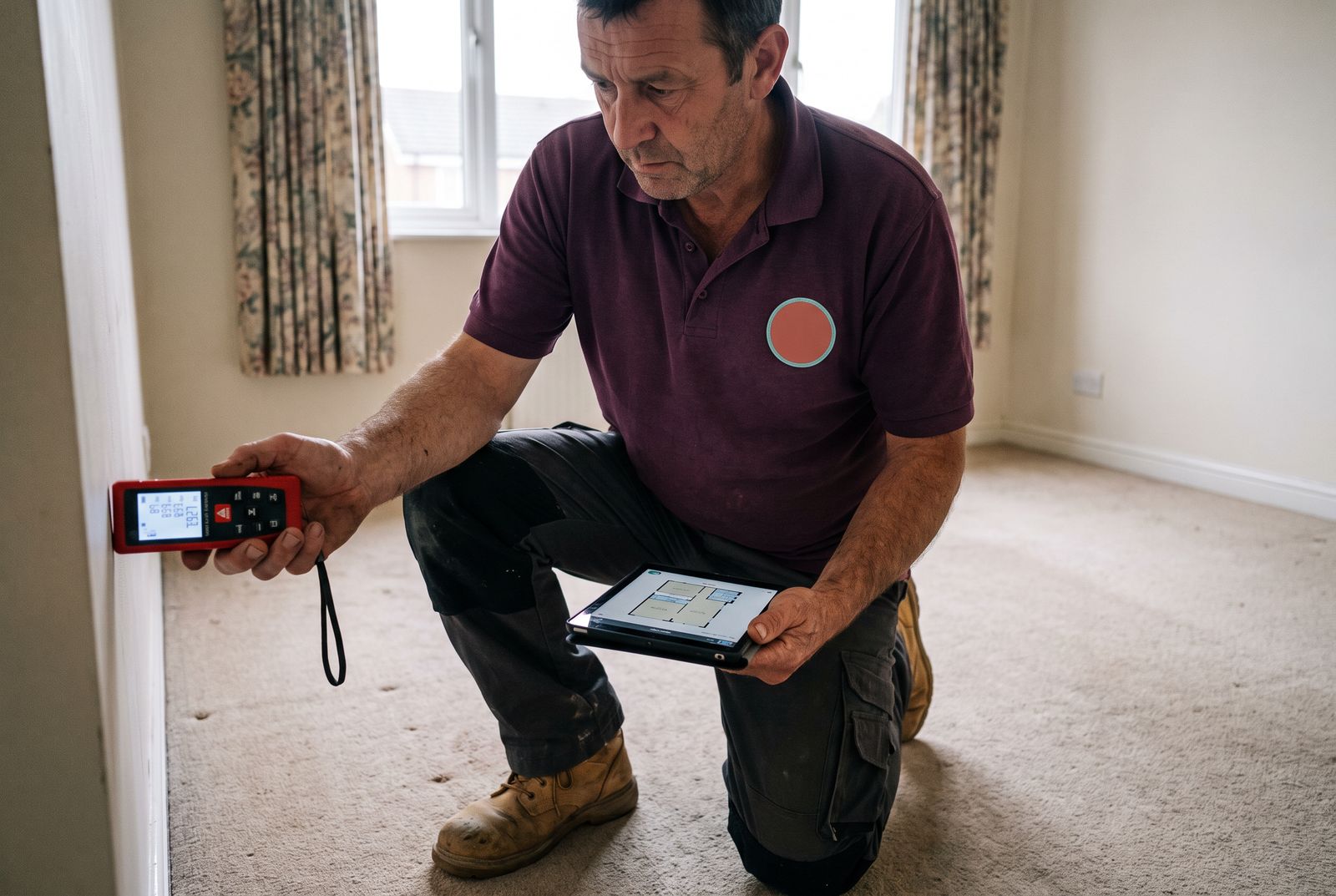 Healthy Homes AssessmentLiving room heating calculations and compliant heat pump installs for rentals under the Healthy Homes Standards.
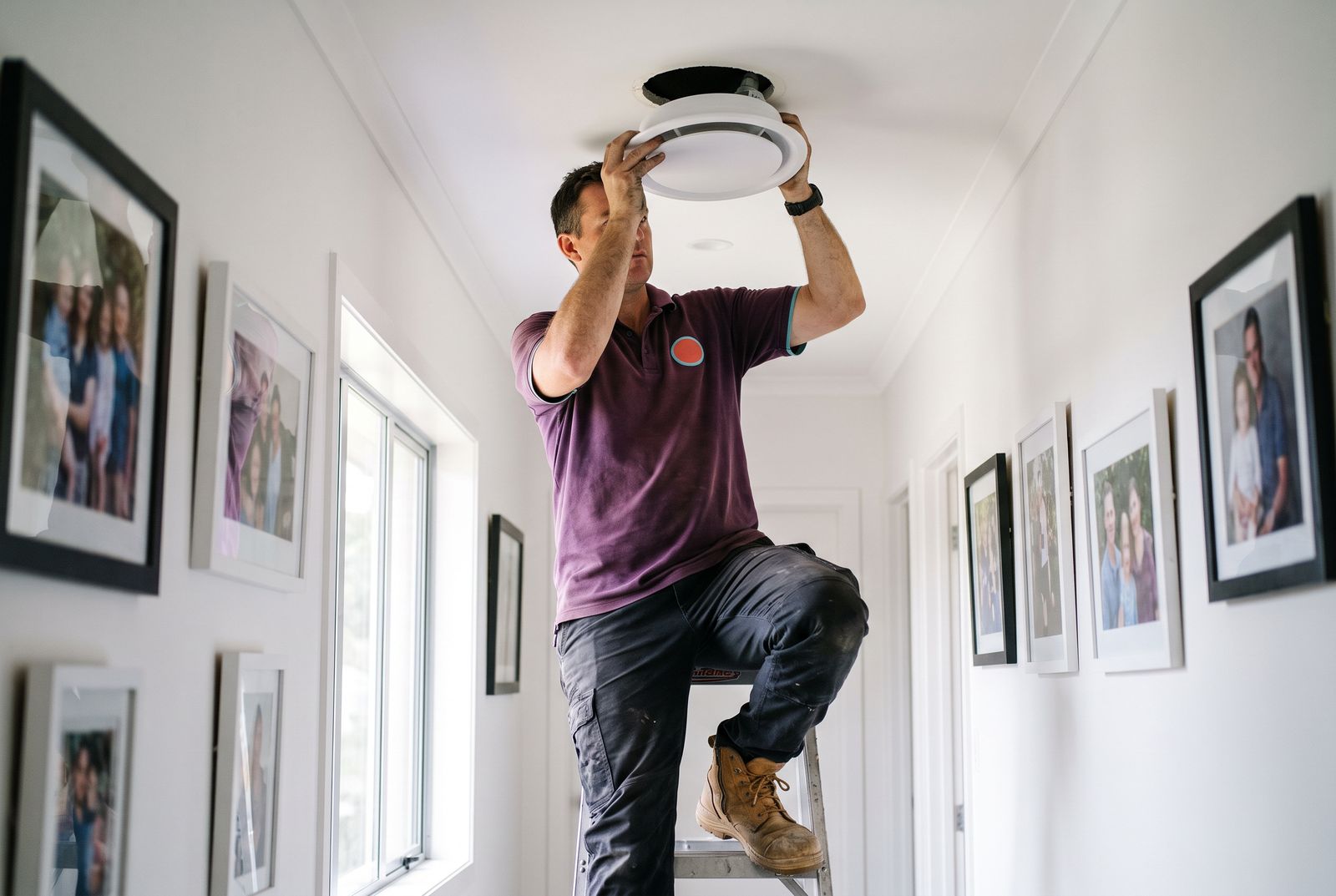 Home VentilationVentilation systems that reduce condensation, mould and stale air, especially in Auckland's humid winters.
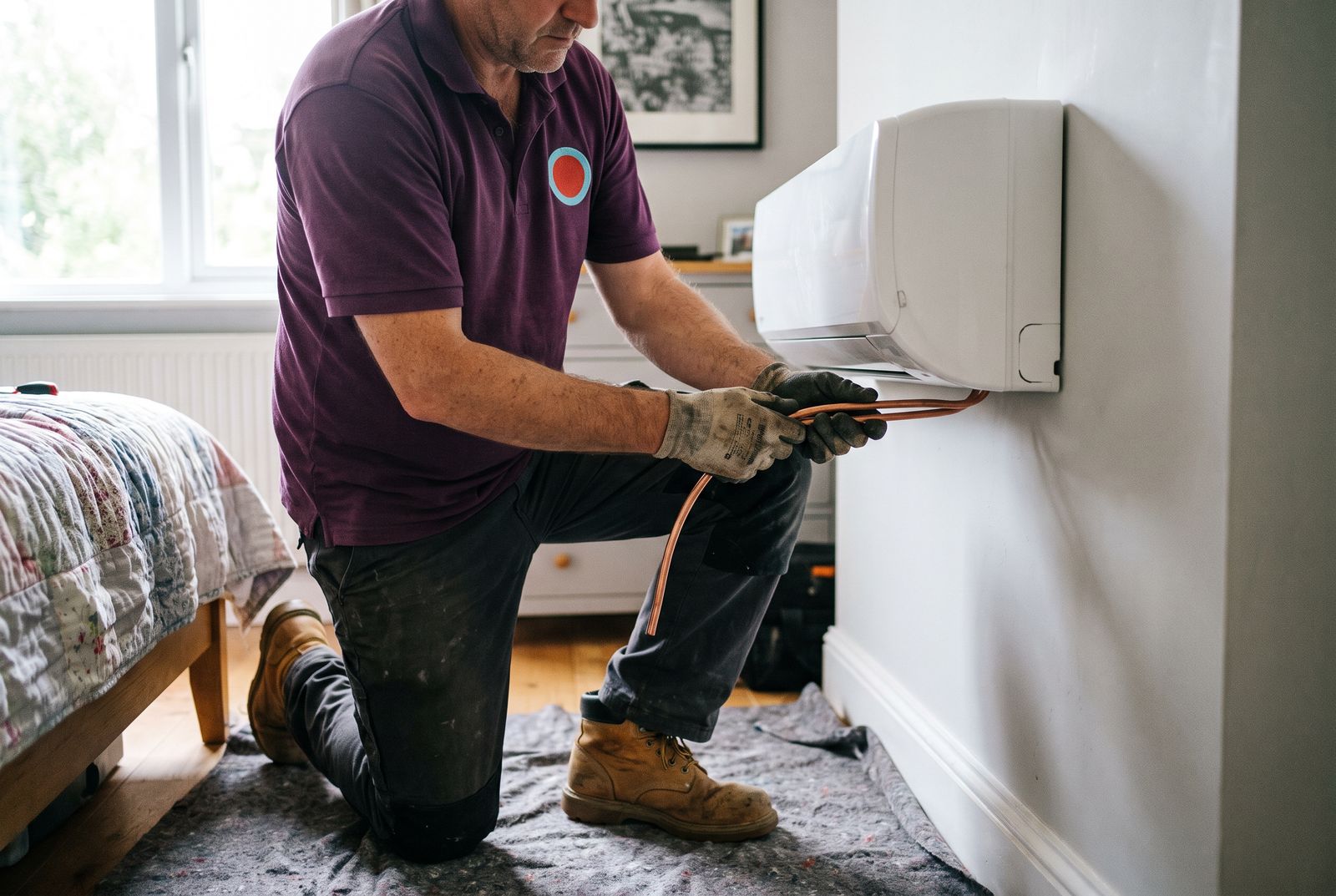 Heat Pump InstallationHeat pumps supplied and installed by our own team, sized to the room and placed where they heat and cool evenly.
Read Next

What Size Heat Pump Do I Need? kW by Room for NZ Homes
Most bedrooms need a heat pump of about 2 to 3 kW, a typical lounge 3.5 to 5 kW and a large open-plan living area 6 kW o...
Read article
How to Stop Condensation on Windows: An Auckland Guide
To stop condensation on windows, pull three levers together: put less moisture into the air, keep rooms warmer, and move...
Read article
What Is Heat Recovery Ventilation and Is It Worth It in NZ?
A heat recovery ventilator is a balanced ventilation system that pulls stale, damp air out of your home and brings filte...
Read article