
In New Zealand, most home air conditioners are heat pumps. A reverse-cycle split system heats in winter and cools in summer using the same indoor and outdoor units, so the unit you buy for summer comfort is also your winter heating. This page looks at air conditioning from the cooling side: sizing for summer, managing humidity, choosing the indoor unit and keeping running costs down.
If your priority is winter heating, start with our high wall heat pumps page. For offices, shops and clinics, see commercial air conditioning.
Pricing: every job starts with a free in-home assessment and a written quote, with a fixed price agreed before any work starts.
Mainly after winter heating? See heat pump installation.
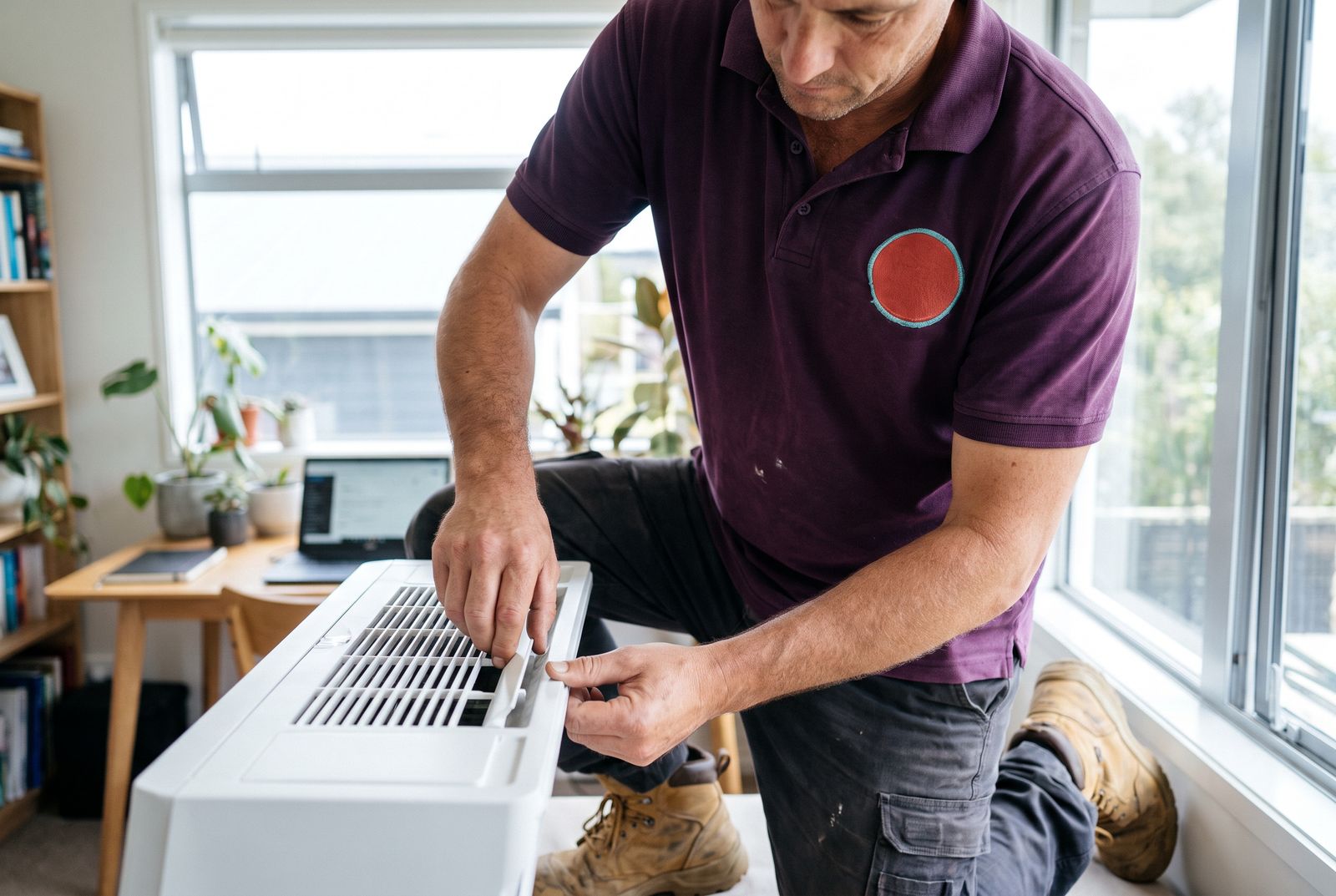
Why Auckland homes need cooling and drying
NIWA describes Auckland's climate as subtropical, with warm, humid summers. The temperature figure is rarely extreme, but the humidity makes rooms feel stuffy and makes sleep harder, especially in upstairs bedrooms, west-facing rooms, newer homes with lots of glass, and apartments that trap heat.
Air conditioning helps in two ways. Cooling mode lowers the temperature, and as air passes over the cold coil, moisture condenses and drains away, so the air also gets drier. Dry mode focuses on removing moisture with less cooling, which suits muggy days that are warm rather than hot. Consumer NZ notes that for serious damp, a dedicated dehumidifier or ventilation is more effective.
Sizing for cooling
Every unit has two capacities: heating and cooling. The cooling figure is usually a little lower than the heating figure on the same model. For a room that mainly needs cooling, size on the cooling capacity, and pay attention to what drives summer heat gain: glass area, which way the windows face, whether there are eaves or blinds, roof insulation, and how many people and computers are in the room.
A unit that is too small runs flat out on hot afternoons and never catches up. One that is too big cools the air quickly but cycles off before it has removed much moisture, leaving the room cool but clammy, a common complaint in humid climates. Our heat pump size calculator gives a starting estimate, and we confirm it at the in-home assessment.
How It Works
Choosing the indoor unit for cooling
EECA's installer guide notes that high wall and ceiling-mounted units tend to cool more effectively than floor units, because cool air is thrown across the room and drops as it mixes. That makes them the usual choice where summer comfort matters. For cooling most of the house, ducted heat pumps keep everything out of sight.
- High wall split: the most common choice for lounges, bedrooms and home offices.
- Ceiling cassette: sits flush in the ceiling and spreads air in several directions, suited to larger rooms and open-plan spaces with a ceiling cavity.
- Ceiling-concealed or bulkhead ducted: hidden in the ceiling with only grilles visible, for one room or a small group of rooms.
- Ducted whole-home: cooling and heating for most of the house from one hidden unit, with zoning.
- Multi-split: several rooms from one outdoor unit, useful for bedrooms on hot nights.
Running costs and efficiency in cooling
Cooling efficiency is shown as EER. Consumer NZ suggests an EER of 3 or more indicates energy-efficient cooling. The Zoned Energy Rating Label shows separate star ratings for heating and cooling out of 10, so check the cooling stars if summer use matters to you, and compare only units of similar capacity.
EECA's practical advice is to avoid using air conditioning when you can: open windows on opposite sides of the house for a through-breeze and close curtains on hot, sunny days. When you do use it, keep doors closed to the room being cooled, use the timer so it is not running in an empty house, and keep the filters clean, as EECA notes clogged filters make the unit use more power.
Home offices, bedrooms and apartments
Home offices often need cooling more than heating, because computers and screens add heat all day. A small high wall unit with a quiet fan setting and Wi-Fi control suits most studies. For bedrooms, quiet operation matters most, so compare the published indoor sound levels at low fan speed.
In apartments, the outdoor unit position is often fixed by the building, and body corporate approval is usually needed. Balcony installations must also avoid creating a climbing point near the balustrade, a placement rule in EECA's installer guide. We can provide specifications and drawings for your body corporate application.
Installation, compliance and maintenance
Air conditioning is installed in the same way as any split heat pump: indoor and outdoor units, refrigerant pipework, a condensate drain and an electrical connection. Cooling produces a lot of condensate in humid weather, so the drain must have a good fall to a suitable outlet. Auckland Council says most residential installs do not need a building consent, but a licensed electrician must connect the unit and you should receive an Electrical Certificate of Compliance.
Before summer, clean the filters and check that the outdoor unit is clear of leaves and plants. An annual service keeps the coil and drain clean, which matters more in cooling season, when a blocked drain can leak water down the wall. Book a free in-home assessment to get a written quote.
Why Choose Cheeky's Heat Pumps for Air Conditioning
Sized for summer as well as winter
We check cooling capacity against glass, orientation and room use, not only the heating figure.
Humidity taken seriously
We avoid oversizing that leaves rooms cold and clammy, and explain when ventilation will do more than dry mode.
Right unit for the room
We compare high wall, cassette and concealed options so the unit suits the ceiling, the décor and the noise you can live with.
Apartment-friendly paperwork
We supply specifications and drawings to support body corporate approval.
Air Conditioning FAQs
Is a heat pump the same as an air conditioner?
In most New Zealand homes, yes. A reverse-cycle split system heats and cools with the same units. Some commercial and portable units are cooling only.
What size air conditioner do I need?
It depends on the room's size, glass, orientation and use. Check the unit's cooling capacity, which is usually a little lower than its heating capacity. We measure before recommending.
Does air conditioning help with humidity?
Yes. Cooling and dry mode both remove moisture from the air. For persistent damp and condensation, ventilation or a dehumidifier usually does a better job.
Which type of air conditioner cools best?
EECA's installer guide notes high wall and ceiling-mounted units tend to cool more effectively than floor-mounted units.
Do I need consent to install air conditioning?
Auckland Council says most residential heat pump installs do not need a building consent. A licensed electrician must connect the unit, and apartments usually need body corporate approval.
How can I keep cooling costs down?
Use a through-breeze and close curtains when you can, cool only the rooms in use, use the timer and keep the filters clean. Choose a unit with good cooling stars on the energy label.
Air Conditioning Near You
Find your region or suburb for local air conditioning information:
Related Heat Pump Services
Air Conditioning Guides
See the heat pump prices guide or every service we offer.