
A multi-split heat pump connects one outdoor unit to two or more indoor units. Each room gets its own indoor unit and remote, but the side of the house has one box instead of three or four. For Auckland townhouses with tight side yards, apartments with one approved plant position, and homes where the outside wall is the deck, that matters.
Multi-split is not always the cheaper or better option, though. Capacity is shared, pipe runs are longer and the whole system relies on one compressor. This page explains the trade-offs so you can decide between a multi-split, separate high wall heat pumps or a ducted heat pump.
Pricing: every job starts with a free in-home assessment and a written quote, with a fixed price agreed before any work starts.
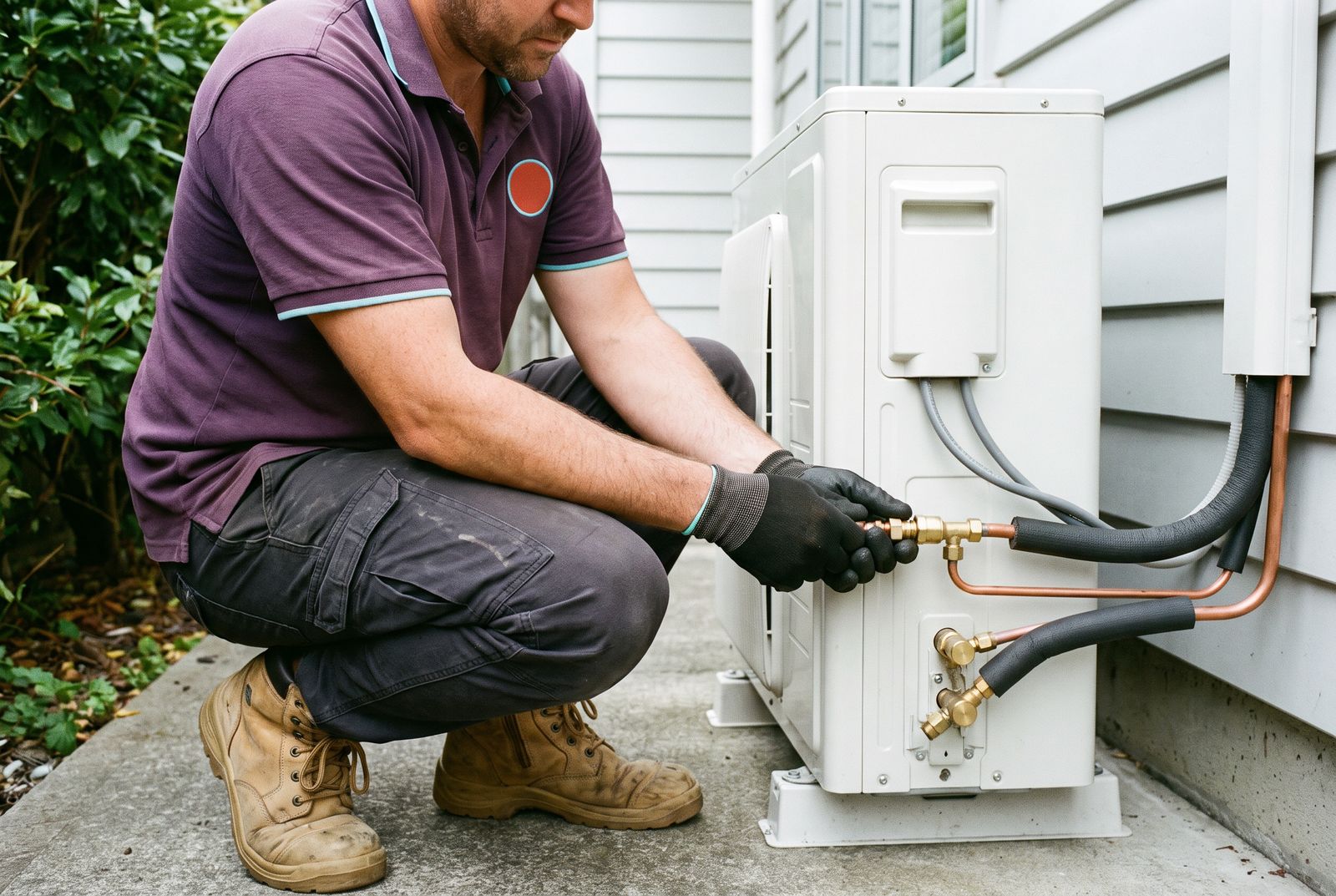
How a multi-split system works
The outdoor unit holds the compressor and sends refrigerant out through separate pipe pairs to each indoor unit. Depending on the brand and model, indoor units can be high wall, floor console, ceiling cassette or small ducted units, mixed on the same system. Mitsubishi Electric's New Zealand range, for example, has outdoor units that run from two up to eight indoor units, and lets some indoor units be added later.
Each room is controlled separately, so you only heat the rooms you are using. The main limitation, noted by both Consumer NZ and Mitsubishi Electric, is that all indoor units on one outdoor unit must be in the same mode. One room cannot cool while another heats.
Shared capacity: the part most quotes skip
The outdoor unit has a fixed total output. When several indoor units run at once, that output is divided between them. Mitsubishi Electric gives a clear example: a 5 kW class indoor unit on one of its three-room outdoor units can deliver up to 5.8 kW running alone, but only about 3.7 kW when a 4.2 kW class unit in another room runs at the same time.
That is fine for bedrooms that are rarely heated together with the lounge at full output. It is a problem if you expect every room to be toasty at 7am on the coldest day. We design around how you actually use the house: which rooms run together, for how long, and which room needs the most heat. Where the main living area needs a lot of capacity, a dedicated high wall unit for the lounge plus a multi-split for the bedrooms is often the better design.
How It Works
Sizing and placement
Each indoor unit is sized to its room, using floor area, ceiling height, insulation, glazing and orientation, as with any heat pump. Then the outdoor unit is chosen to cover the combined load within the manufacturer's limits on total connected capacity and the largest indoor unit allowed. EECA's installer guide notes that where a space is large, two smaller units or a multi-split may distribute heat better than one large unit.
Pipe routes are the main design job. Every indoor unit needs its own pipe pair and drain, so we plan routes through the roof space, under the floor or along external walls in capping. Long runs and many bends reduce performance and add cost, so the outdoor unit goes where it shortens the total runs, while still staying clear of bedroom windows and the boundary. Our heat pump size calculator gives a quick per-room estimate.
Costs: multi-split versus separate units
Consumer NZ says a multi-split is usually cheaper than buying separate outdoor units for each room, but longer pipe runs can add installation cost. In practice, the comparison depends on the house. Two bedrooms next to each other on an outside wall may be cheaper as two simple back-to-back high wall units. Three or four rooms spread around a home with nowhere for extra outdoor units often suit a multi-split.
Running costs are similar per room in normal use, because you only heat the rooms you switch on. The risk to weigh is that one outdoor unit fault takes out every room on that system. Our heat pump prices guide covers published price ranges, and we quote both options side by side when both are workable.
Apartments, townhouses and Auckland conditions
Many Auckland apartments and terrace houses have one approved spot for outdoor plant, often a balcony or service cupboard. A multi-split lets you use that single spot for several rooms. Body corporate approval is normally needed for the outdoor unit position and any penetrations, and the EECA guide warns against placing units on a raised balcony where they make it easier to climb the balustrade.
In summer, multi-splits give each bedroom its own cooling and dry mode, which helps with Auckland's warm, humid nights. Remember the same-mode rule: the whole system is either heating or cooling.
Why Choose Cheeky's Heat Pumps for Multi-Split Heat Pumps
We design for how you use the house
We ask which rooms run together and when, then check the shared capacity numbers before choosing an outdoor unit.
Both options quoted
Where separate units are also workable, we price them side by side so you can see the real difference.
Pipe routes planned room by room
We map every pipe and drain route at the assessment, so there are no surprise boxing or capping runs on install day.
Body corporate ready
We supply drawings and specifications to support approval for the outdoor unit position.
Multi-Split Heat Pumps FAQs
How many rooms can one outdoor unit run?
It depends on the model. Mitsubishi Electric's New Zealand multi-room outdoor units, for example, range from two indoor units up to eight. We match the outdoor unit to the rooms and their sizes.
Can one room heat while another cools?
No. On a standard multi-split, all indoor units run in the same mode at the same time.
Is a multi-split cheaper than separate heat pumps?
Often, but not always. Consumer NZ notes multi-splits are usually cheaper than separate outdoor units, but longer pipe runs can add cost. We quote both where both are workable.
Can I add another indoor unit later?
Some systems allow it, provided the outdoor unit has a spare connection and capacity. If you plan to add a room, tell us at the assessment so we choose an outdoor unit with room to grow.
Will rooms get less heat when they all run together?
Yes, capacity is shared. A unit running alone can deliver more than when several run at once, which is why we design around how you use the rooms.
Is multi-split or ducted better for a whole home?
Ducted hides everything and suits whole-home zoning. Multi-split suits homes without roof or underfloor space for ducts, or where you only need some rooms done.
Multi-Split Heat Pumps Near You
Find your region or suburb for local multi-split heat pumps information:
Related Heat Pump Services
- Heat Pump Installation
- High Wall Heat Pumps
- Floor Console Heat Pumps
- Heat Pump Servicing
- Ducted Heat Pumps
Multi-Split Heat Pumps Guides
- What Size Heat Pump Do I Need? kW by Room for NZ Homes
- Ducted Heat Pump Cost in NZ: Price, Running Costs and Zones
- How Much Does a Heat Pump Cost to Install in NZ? (2026)
See the heat pump prices guide or every service we offer.