
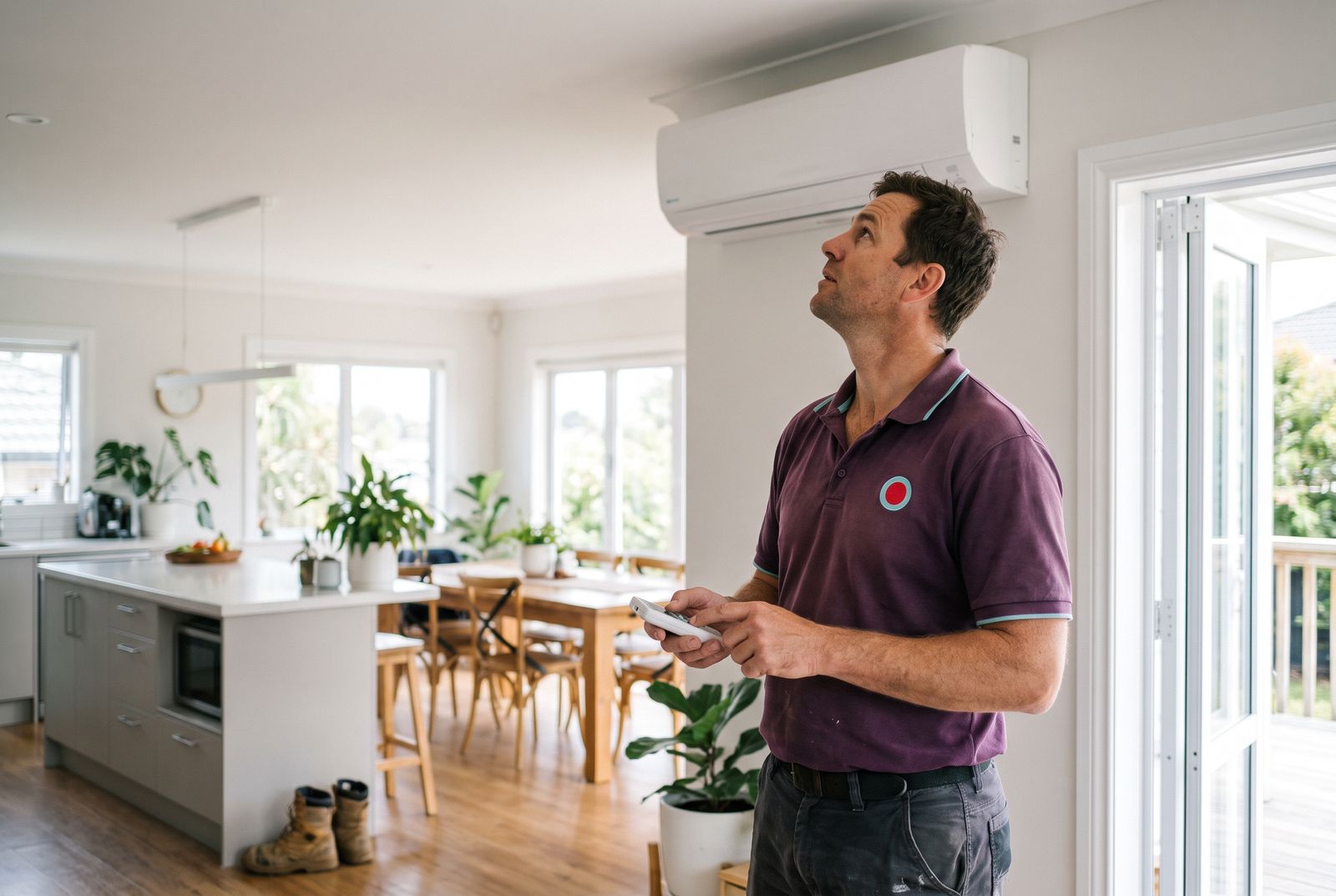
Most heat pumps leave the factory on settings that suit nobody in particular, and most remotes have more buttons than anyone needs. The good news is that four settings do nearly all the work: mode, temperature, fan and timer.
Here is a simple winter settings card, followed by the reasons behind each choice, what dry mode actually does, what the common remote symbols mean and how to switch over for summer.
What temperature should a heat pump be set at in winter?
Set it between 18 and 21 degrees. Gen Less, the government's energy efficiency programme, says 18 degrees or above helps fight damp and mould, while staying below 21 degrees saves power. EECA's guide adds that high thermostat settings cause high electricity use, and inadequate heating can lead to mould growth and dampness.
Setting 26 degrees will not warm the room faster. The heat pump runs at full output either way until it nears the set point, so a high setting only means it keeps going long after you are comfortable.
Start at 20 degrees in the living area and adjust by one degree at a time. Bedrooms are usually comfortable at the lower end of the range.
| Setting | Winter choice | Why |
|---|---|---|
| Mode | Heat | Stops the unit swinging into cooling |
| Temperature | 18 to 21 degrees | Healthy and keeps the bill down |
| Fan | Auto | Full output when the room is cold |
| Vanes | Pointing down | Warm air rises, so aim it at the floor |
| Timer | On shortly before you need it | No heating an empty house |
| Filters | Clean as often as monthly | Clogged filters use more power |
Should I use auto or heat mode?
Use Heat mode in winter. EECA's checklist for using a heat pump efficiently says to avoid Auto mode because the unit tries to hold the set temperature by changing between heating and cooling as the room temperature moves, which can waste a lot of energy.
Auto mode is easy to confuse with Auto fan, which is a different button. EECA recommends the Auto fan setting in very cold weather and suggests avoiding Low and Quiet fan, because those limit how much heat the unit can deliver. So the best winter combination is Heat mode with Auto fan.
Is it cheaper to leave a heat pump on overnight?
Usually not. For most households, it is cheaper to let the heat pump turn off at bedtime and use the timer to bring the living area or bedroom back up before you get up. EECA's advice is to only heat when you need it.
There are good exceptions. A baby's room, an older person's bedroom or a very damp room can benefit from a steady, low setting through the night rather than going cold. In that case set it at the low end, around 18 degrees, rather than leaving it at daytime comfort levels.
Homes that lose heat fast change the picture. In Mt Eden, big trees and established gardens shade many rooms through winter, and older homes with single glazing show Auckland's damp as condensation by morning. In a home like that, a timer that starts heating an hour before you wake does more than an all-night setting. If the unit cannot bring the room up in that time, it may need a service or may be undersized.
Settings right but still cold?
Cheeky's Heat Pumps can service your unit and check its output, so the settings you choose actually deliver the warmth you expect.
What does dry mode do on a heat pump?
Dry mode turns your heat pump into a dehumidifier for the room it is in. Consumer NZ explains that it works like the moisture removal that happens in cooling, but with the fan running low so the room cools less. The symbol is usually a water droplet.
The catch in winter is that the unit cannot heat and dehumidify at the same time, so Consumer NZ warns you may start to feel the chill. It also notes that manufacturers rarely publish dehumidifying rates, and that a living room unit of 5 to 8 kW might manage 3 to 5 litres an hour at best.
For cold, damp winter days, Heat mode is the better choice. Warm air holds moisture rather than dripping it onto windows, and Consumer NZ suggests running a dehumidifier alongside the heat pump on heating mode if you have one. Save dry mode for mild, muggy days in autumn and spring.
Dry mode only treats one room. In Ellerslie, many older homes have damp subfloors and poor ventilation, so a heat pump on its own will not dry the house. If you are fighting condensation in several rooms, home ventilation deals with the cause rather than the symptom.
What do the symbols on my remote mean?
Most heat pump remotes use similar symbols, although every brand differs a little, so keep the manual handy or download it from the manufacturer's NZ website. These are the common ones:
- Sun or flame: Heat mode. Your winter setting.
- Snowflake: Cool mode. Your summer setting.
- Water droplet: Dry mode, which dehumidifies with little cooling.
- Fan or propeller on its own: Fan only. It moves air without heating or cooling.
- Circular arrows or the letter A next to the mode: Auto mode, which picks heating or cooling for you. Avoid it in winter.
- Fan with bars: Fan speed. Choose Auto in cold weather.
- Clock: On and off timers.
- Wavy lines or arrows: Vane swing or direction.
Why does my heat pump stop and blow cold air in winter?
This is usually a defrost cycle and it is normal. EECA's guide explains that frost can build up on the outdoor coil when it is below about 7 degrees, especially in high humidity, and the unit has to melt it before heating can continue. During defrost no heat is supplied indoors, and it usually only takes a few minutes.
Defrosts are more frequent in colder spots. Inland areas around Pukekohe can be colder on still winter nights than coastal suburbs, so units there defrost more often. If a defrost happens every hour or the room never warms up, see our guide to a heat pump not heating, because frequent defrosting can also mean the unit is undersized or needs servicing.
What are the best heat pump settings for summer?
In summer, switch to Cool mode, set the temperature only a few degrees below what you would find comfortable without it, and point the vanes level so cool air spreads across the room before it drops. Use dry mode on humid days when the air feels sticky but not hot.
EECA's advice is to avoid using the heat pump as an air conditioner when you can: open windows on opposite sides of the house for a through-breeze and close curtains on hot, sunny days. When you do cool, close the doors to that room and use the timer.
Whatever the season, a heat pump only performs as well as it is maintained. Cheeky's Heat Pumps offers heat pump servicing, which includes a filter and coil check, a drain and fan check and a performance test. If the settings are right and the room still will not warm up, Cheeky's Heat Pumps can diagnose the fault and arrange heat pump repairs, or you can book online at a time that suits.
Frequently Asked Questions
What is the most economical temperature for a heat pump?
The lowest setting you are comfortable with inside the 18 to 21 degree range. Each degree higher means the unit works harder for the whole time it runs. Many households find 19 or 20 degrees comfortable in a living area.
Should the heat pump vanes point up or down in winter?
Down. Warm air rises, as EECA's installer guide notes, so pointing the vanes towards the floor gets heat where you sit before it collects at the ceiling. In summer, set them level so cool air spreads out before it falls.
What does the econo or eco button do?
On most models it limits the compressor's power draw or adjusts the set point slightly to save energy. It can be useful once a room is warm, but on very cold days it may stop the unit reaching temperature. Check your manual, as each brand uses it differently.
Is it bad to turn a heat pump on and off a lot?
Switching off when you leave and on when you return is fine and is what EECA recommends. What wastes energy is rapid cycling caused by an oversized unit or very small temperature changes, not normal daily use.
Why is my heat pump remote showing a different temperature from the room?
The set point on the remote is the target, not a reading, and the unit measures air near the indoor unit, which may differ from where you sit. If the room feels cool at a 20 degree setting, raise it by one degree rather than five.
Our Services
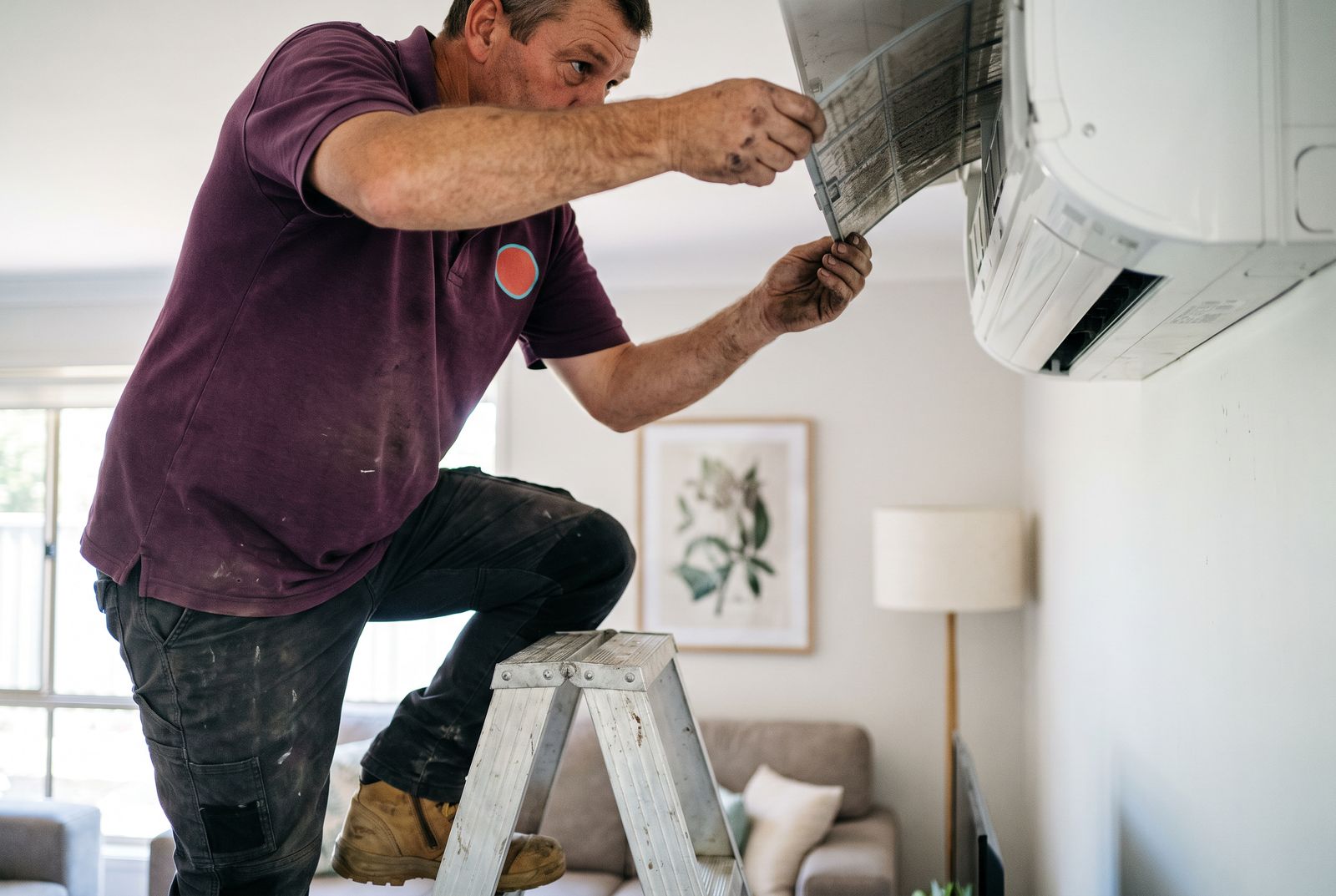 Heat Pump ServicingA proper service keeps your heat pump efficient, quiet and healthy, and catches small faults before they become expensive.
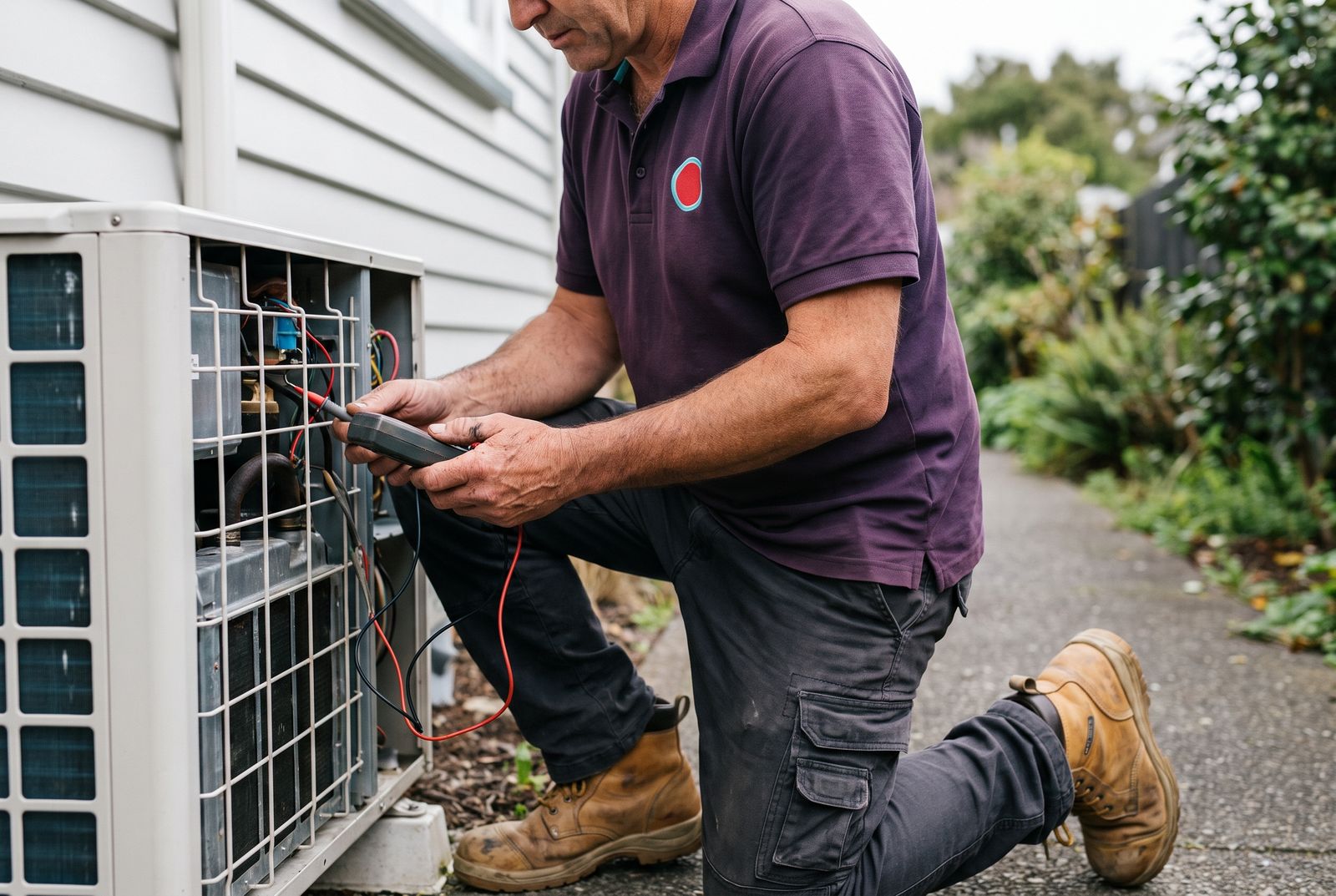 Heat Pump RepairsHeat pump not heating, leaking water, making noise or showing an error code?
Read Next
How Much Does a Heat Pump Cost to Run in NZ?
A typical NZ heat pump costs roughly 15 to 75 cents an hour to run at full output, depending on its size and efficiency,...
Read article
How to Stop Condensation on Windows: An Auckland Guide
To stop condensation on windows, pull three levers together: put less moisture into the air, keep rooms warmer, and move...
Read article
Heat Pump Not Heating? Common Causes and Fixes
A heat pump that is not heating is most often on the wrong mode, choked by dirty filters, or in a normal defrost cycle t...
Read article