

It is always the coldest morning of the year when the heat pump decides to blow lukewarm air. Before you book a repair, a few owner checks solve a surprising number of cases, and they cost nothing.
This guide starts with those checks, explains defrost and the flashing lights that worry people, then covers the faults that need a technician, including low refrigerant, and how to decide between repair and replacement.
Why is my heat pump blowing cold air?
The most common reasons are simple: the unit is on Cool, Dry, Fan or Auto mode rather than Heat, the set temperature is below the room temperature, the filters are clogged, or it is in a defrost cycle. Work through these owner checks before calling anyone:
- Mode: make sure the remote shows Heat, usually a sun or flame symbol. EECA recommends Heat mode rather than Auto in winter.
- Set temperature: set it a few degrees above the current room temperature, within 18 to 21 degrees for normal use.
- Fan: avoid Low and Quiet in very cold weather. EECA suggests the Auto fan setting to get the full heating output.
- Filters: slide them out and look. Dusty filters cut airflow and heat output, and EECA notes clogged filters make the unit use more power.
- Outdoor unit: clear leaves, plants, covers or anything stacked against it, so air can flow through the coil.
- Remote and timer: replace the remote batteries and check an old timer setting is not switching the unit off.
- Time: give it 10 to 15 minutes after starting. Heat pumps warm the coil before blowing warm air, so the first air out can feel cool.
Why does my heat pump stop heating and go into defrost?
Defrost is normal. EECA's guide explains that at outdoor temperatures below about 7 degrees, especially in humid air, moisture freezes onto the outdoor coil. The unit reverses briefly to melt the ice, and during that time no heat is supplied indoors. EECA notes this usually only takes a few minutes. You may see steam and water coming off the outdoor unit while it happens.
Frequent defrosting is a different story. EECA's guide says undersized heat pumps need to defrost frequently in low temperatures, which reduces their efficiency and their ability to heat the room. If your unit defrosts every hour and never catches up, it may be too small, low on refrigerant, or have a dirty outdoor coil.
Location makes a difference. Inland areas around Pukekohe can be colder on still winter nights than the coast, and EECA's guide tells installers to size for the capacity a unit delivers at the local design temperature, not just its rated output. A unit sized for a mild coastal suburb can struggle there.
What does a flashing light on my heat pump mean?
A flashing light can be a simple reminder, such as a filter or timer indicator, or an error code reporting a fault. The pattern of flashes, or the code shown on the remote, tells a technician which part has a problem, but every brand uses its own codes.
Look up the light pattern in your manual or on the manufacturer's NZ website first. If it is a filter reminder, clean the filters and reset it. If it is an error code, turn the unit off at the remote and at its isolating switch, wait a few minutes and restart it. If the code comes back, write it down and book heat pump repairs, because the code saves time on diagnosis.
Still blowing cold air?
Cheeky's Heat Pumps will find the fault, explain it plainly and give you a clear repair or replace recommendation.
Why is my heat pump noisy?
Some noise is normal: a whoosh or hiss during defrost, clicks as plastic parts expand and contract, and a hum from the outdoor unit while the compressor runs. Rattling, grinding, squealing or a sudden change in sound usually points to a loose panel, a worn fan motor or bearing, or debris in the fan.
On open, windy sites the outdoor unit takes a beating. EECA's guide warns that strong wind can make the outdoor fan spin in reverse and burn out the motor, which is why units should be sheltered. On lifestyle blocks around Kumeu, outdoor units sit in open paddock wind, and dust and debris from paddocks and gardens build up on outdoor coils, reducing heat output. Clearing around the unit and rinsing the coil is part of keeping it heating.
Can low refrigerant stop a heat pump heating?
Yes. A heat pump moves heat using refrigerant, so if some has leaked out, it delivers less heat, may ice up and can stop heating altogether. Refrigerant does not get used up, so low refrigerant always means there is a leak somewhere.
This is not a DIY job. EECA's guide says heat pump systems must be installed and serviced by someone who holds an Approved Filler Compliance Certificate for refrigerant handling, and that refrigerant must not be released into the atmosphere. The right fix is to find and repair the leak, pressure test the system and then recharge it. Topping up gas without fixing the leak only buys a few weeks or months.
Should I repair or replace an old heat pump?
Repair it if the unit is reasonably young, the fault is a single part such as a sensor, fan motor or control board, and it has heated well until now. Consider replacing it if the compressor has failed, the coil is leaking, faults keep coming back, or the unit never heated the room properly in the first place.
Undersizing is a common reason to replace rather than repair. Glen Eden homes below the Waitakere foothills are often shaded and damp, so heating loads are higher than the original unit may have been sized for. In that case, fixing the old unit restores the same shortfall. A heat pump replacement sized for the room, reusing the pipework where it is sound, fixes the problem for good.
A regular heat pump service also catches small faults before they become expensive. Cheeky's Heat Pumps services units with a fixed price agreed before we start, and a technician will check the filters, coil, drain and performance so you know where the unit stands.
When to call a technician
Call a technician if the unit still blows cold air after you have checked the mode, set temperature, filters and outdoor unit, if an error code keeps returning, if it defrosts constantly, or if it is making new noises. Consumer NZ's advice is that you only need a technician when a fault develops, such as strange noises, leaks inside or poor performance after you have cleaned the filters.
Cheeky's Heat Pumps diagnoses and repairs heat pumps across Auckland and will explain the fault in plain English before any work goes ahead. If you want to rule out a settings problem first, our guide to heat pump settings for winter is a quick read. When you are ready, book a technician online.
Frequently Asked Questions
Why is my heat pump heating but the room is still cold?
The unit may be too small for the room, the room may be losing heat through single glazing or an open doorway, or the fan may be on Low or Quiet. Close internal doors, draw the curtains and set the fan to Auto. If it still cannot keep up, ask for a sizing check.
Why does my heat pump heat for a while and then blow cold?
Most often it is defrosting, which EECA says is normal in very cold weather and usually lasts a few minutes. If it happens very often, the outdoor coil may be dirty or the unit undersized or low on refrigerant, which needs a technician to check.
Can a power cut affect my heat pump?
A power cut can reset the settings or timer, and some units show an error after power returns. Turn it off at the isolating switch for a few minutes, then restart and check the mode and temperature on the remote.
Why is ice forming on my outdoor unit?
Some frost on a cold, damp morning is normal and clears with each defrost cycle. Thick ice that does not clear, or ice on the indoor unit's pipes, can point to low refrigerant or an airflow problem and should be checked.
How long should a heat pump take to warm a room?
It depends on the room size, insulation and how cold it started. A correctly sized unit should make a noticeable difference within 15 to 30 minutes. If a room never reaches the set temperature on a normal winter day, the unit may be undersized or have a fault.
Our Services
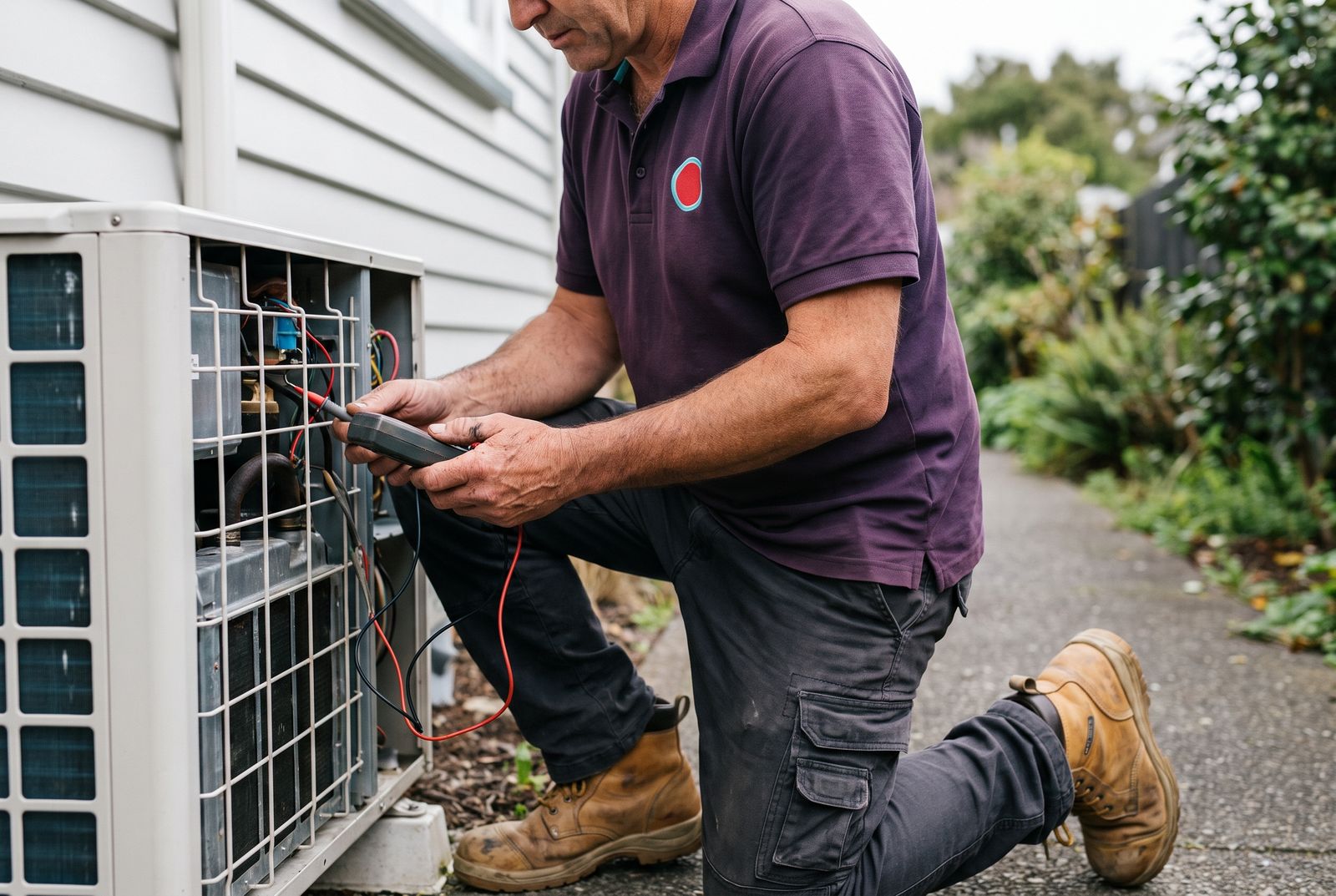 Heat Pump RepairsHeat pump not heating, leaking water, making noise or showing an error code?
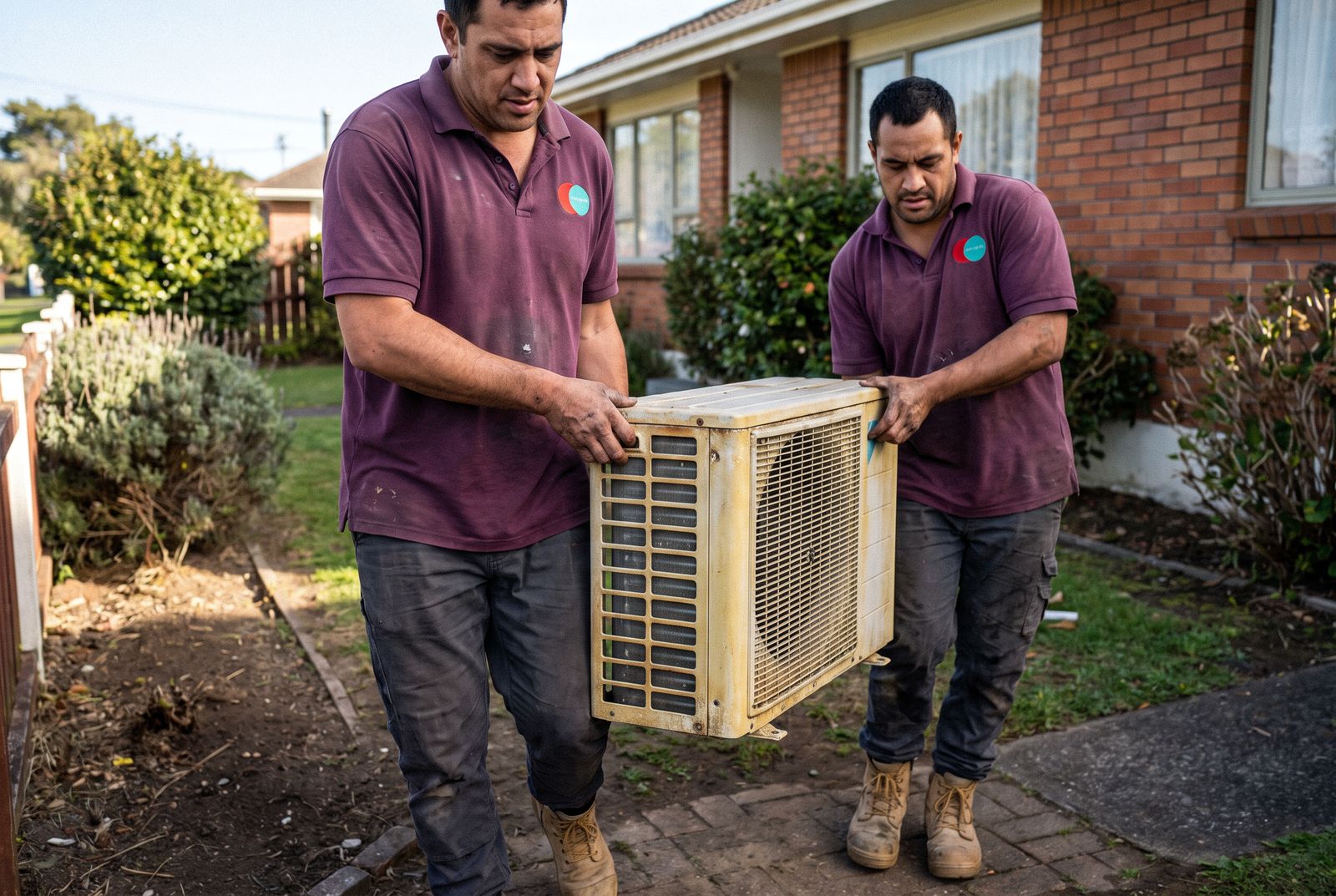 Heat Pump ReplacementSwap an old, noisy or inefficient heat pump for a modern inverter model, reusing pipework where it is sound.
Read Next
Heat Pump Leaking Water Inside? Causes and Fixes
A heat pump or air conditioner leaking water inside is almost always a drainage problem. The three usual causes, in orde...
Read article
Best Heat Pump Settings for Winter (and What Dry Mode Does)
For winter, set your heat pump to Heat mode, not Auto, at 18 to 21 degrees, with the fan on Auto rather than Low or Quie...
Read article
What Size Heat Pump Do I Need? kW by Room for NZ Homes
Most bedrooms need a heat pump of about 2 to 3 kW, a typical lounge 3.5 to 5 kW and a large open-plan living area 6 kW o...
Read article