
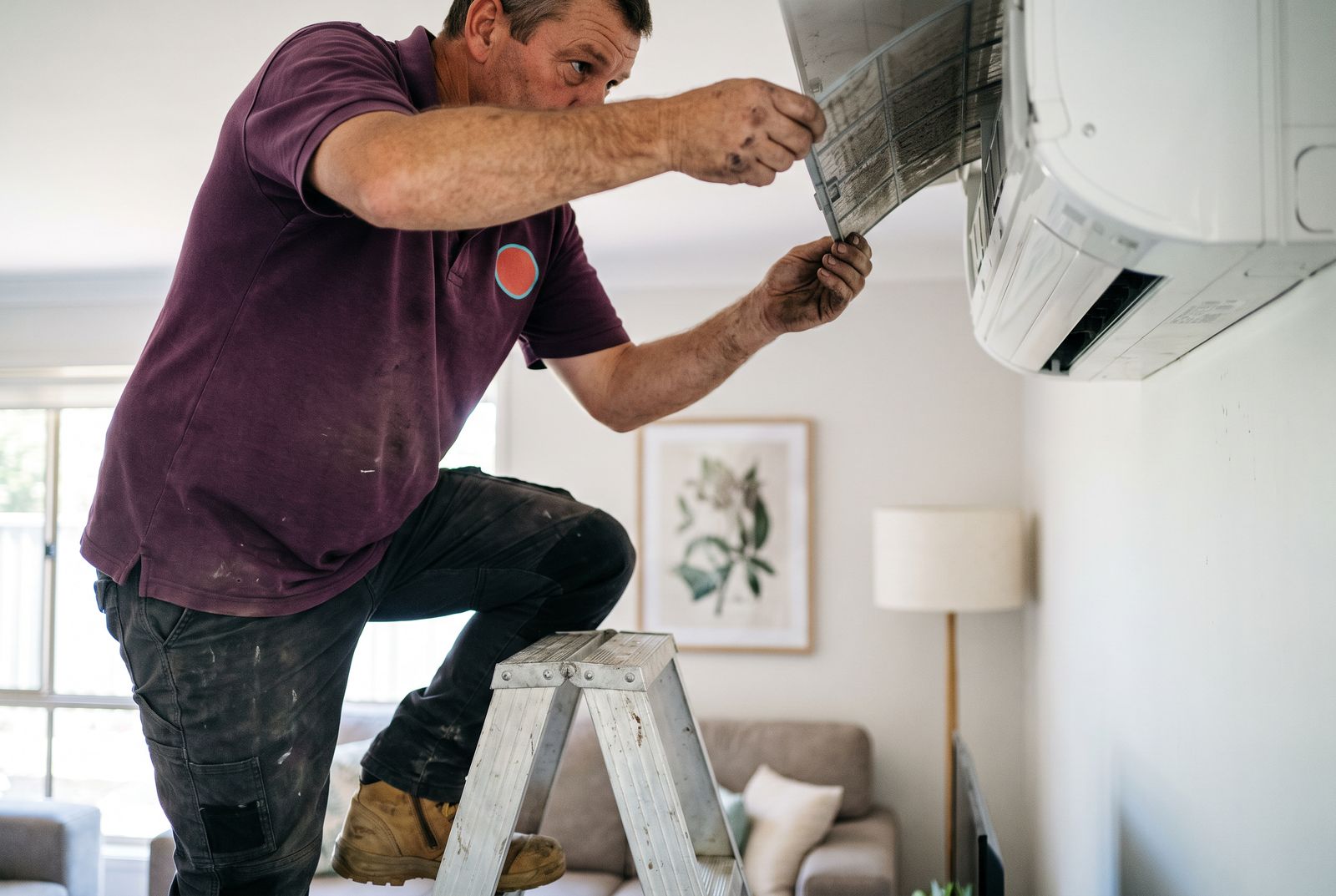
Every heat pump makes water. When the indoor coil cools the air in cooling or dry mode, moisture condenses on it, runs into a tray and leaves the house through a small drain pipe. When that path is blocked, kinked or running uphill, the water has nowhere to go except down your wall.
This guide explains the causes in the order we would check them, what you can safely do yourself, why the outdoor unit drips, and when to stop and call a technician.
Why is my heat pump leaking water inside?
Your heat pump is leaking inside because the water it removes from the air is not reaching the drain. Condensate collects in a tray under the indoor coil and flows out by gravity, so anything that slows that flow will make the tray overflow.
Here are the common causes, roughly in order of how often they turn up:
- A blocked drain. Dust, mould and slime build up in the tray and the drain pipe, especially on units that run a lot in cooling or dry mode.
- Dirty filters. Restricted airflow can let the indoor coil get cold enough to ice up. When the ice melts, more water arrives at once than the tray can handle.
- Poor drain fall. EECA's installer guide says the drain pipe needs sufficient fall for condensate to drain away, and should run beneath the refrigerant line through the wall. If it sags or rises anywhere, water sits in it.
- A unit that is not level, so water runs to the wrong end of the tray.
- A crushed, kinked or blocked drain outlet outside, often from leaf litter, insects or garden growth.
- A failed condensate pump, on installs where the water has to be pumped rather than drained by gravity.
Is a heat pump leaking water dangerous?
A small drip is not an emergency, but it should not be ignored. Water running near the unit's electrics, the power point or wall wiring is a safety risk, and water soaking into plasterboard and framing leads to stains, swelling and mould.
If water is dripping onto anything electrical, or near the unit's power supply, switch the heat pump off at the remote and at its isolating switch or the switchboard, then dry the area. Consumer NZ's advice is simple: a bit of water on the ground by the outside unit is fine, but if it is inside the house, you have a problem. It also warns that mould on the fins or filters probably means mould inside the unit, which needs a professional clean so you are not blowing spores around the home.
How do I fix a blocked heat pump drain?
You can check the easy things yourself, but clearing the tray and drain inside the unit is a job for a technician. The tray sits behind the coil and fan, and forcing a wire or chemicals into it can damage the coil or push the blockage further in.
Safe checks you can do:
- Turn the unit off and clean the filters, then let any ice on the coil melt fully before restarting.
- Find where the drain comes out outside, usually near the outdoor unit or into a garden bed, and clear any leaves, soil or insect nests from the outlet.
- Check the drain pipe is not squashed behind furniture or kinked where it leaves the wall.
- Run the unit in cooling for 20 minutes and watch whether water now drips from the outside end.
Water coming down the wall?
Cheeky's Heat Pumps can flush the drain, check the fall and find the cause, so the leak does not come back next summer.
Is water dripping from the outdoor unit normal?
Yes, water from the outdoor unit is normal, especially in winter. In heating mode the outdoor coil is colder than the outside air, so moisture condenses on it, and EECA's installer guide notes that condensation will always be produced during heating and must be drained away safely.
On cold, damp mornings frost forms on that coil. The unit then runs a short defrost cycle to melt it, and you may see a puff of steam and a burst of water from the outdoor unit. That is the system working as designed. What matters is where the water ends up: EECA's guide says it should drain to the lawn or garden, or to stormwater where permitted, and not into a gully trap.
Can a dirty filter make a heat pump leak?
Yes. Clogged filters reduce airflow over the indoor coil, which can let it freeze in cooling or dry mode. When the unit cycles off, the ice melts and floods the tray faster than the drain can take it away.
Dirty filters also feed the drain blockage. Dust that gets past a clogged filter sticks to the wet coil and washes down into the tray, where it mixes with mould and slime. Consumer NZ suggests cleaning filters about once a year for light winter use and at least four times a year if you heat and cool through both seasons. Our guide on how to clean a heat pump filter walks through it, and if the unit still leaks after a clean, a heat pump cleaning that flushes the tray and drain is the next step.
Why do some Auckland homes see more heat pump leaks?
Units that run long hours in cooling or dry mode, and units with drain outlets near trees, are the ones most likely to leak. Auckland's humidity means many households use dry mode through autumn and spring as well as summer, which keeps the indoor coil wet for long periods.
In Titirangi, overhanging native trees drop leaf litter around outdoor units and drain outlets, and the damp, shaded sections encourage growth in the pipe. Henderson's tree-lined sections have the same problem with leaves collecting where the drain discharges. In newer, well-sealed Millwater homes in Silverdale, moisture from cooking and showers is trapped indoors, so heat pumps often run on dry mode and produce more condensate than an older, draughtier home would.
When should I call a technician?
Call a technician if water keeps coming inside after you have cleaned the filters and cleared the outside drain outlet, if you can see mould on the fins, or if the unit was recently installed or moved. A leak on a new install usually points to drain fall or levelling, which the installer should put right.
Cheeky's Heat Pumps handles heat pump repairs across Auckland. A technician will flush the tray and drain line, check the fall and the condensate pump if there is one, confirm the unit is level and look for coil icing that might point to low refrigerant. If the coil and fan barrel are dirty, we will recommend a deep clean.
If the leak is one of several symptoms, such as weak heating or ice on the coil, our guide to a heat pump not heating covers the next checks. Otherwise, book a technician online and Cheeky's Heat Pumps will get the water going where it should.
Frequently Asked Questions
Why does my heat pump only leak in summer?
Cooling and dry mode pull the most moisture out of the air, so that is when the drain carries the most water. A partly blocked drain can cope with the small amount made in winter heating but overflows once the unit starts cooling on humid days.
Can I keep using my heat pump while it is leaking?
It is best not to. Continuing to run it in cooling or dry mode adds more water to an overflowing tray. Heating mode makes little water indoors, so if you need warmth you may be able to use it briefly, but switch off if water is near any electrics.
Does a leaking heat pump mean it needs regassing?
Not usually. Most indoor leaks are drainage problems. Low refrigerant can make the coil ice up, and that ice later melts, but a technician should find and repair any refrigerant leak first, because topping up a leaking system only delays the problem.
How much water does a heat pump produce?
It varies with humidity and how long the unit runs. On a muggy Auckland day in cooling or dry mode, a living room unit can produce several litres, which is why a slow or partly blocked drain shows up quickly.
Will a leak void my heat pump warranty?
A leak caused by a blocked drain from lack of cleaning is usually treated as maintenance, not a warranty fault. A leak on a new install caused by drain fall or levelling is an installation issue the installer should fix. Check your warranty terms for specifics.
Our Services
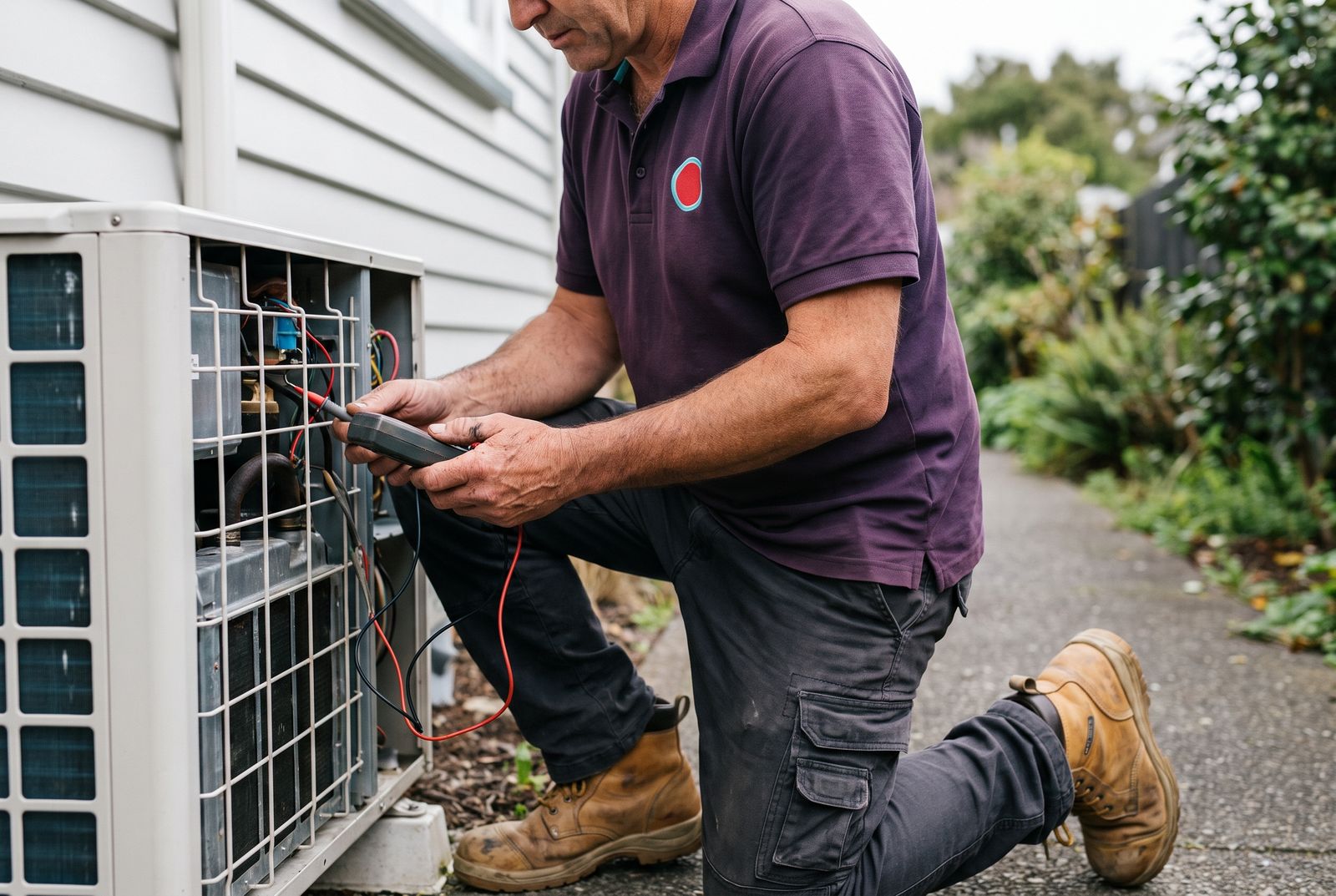 Heat Pump RepairsHeat pump not heating, leaking water, making noise or showing an error code?
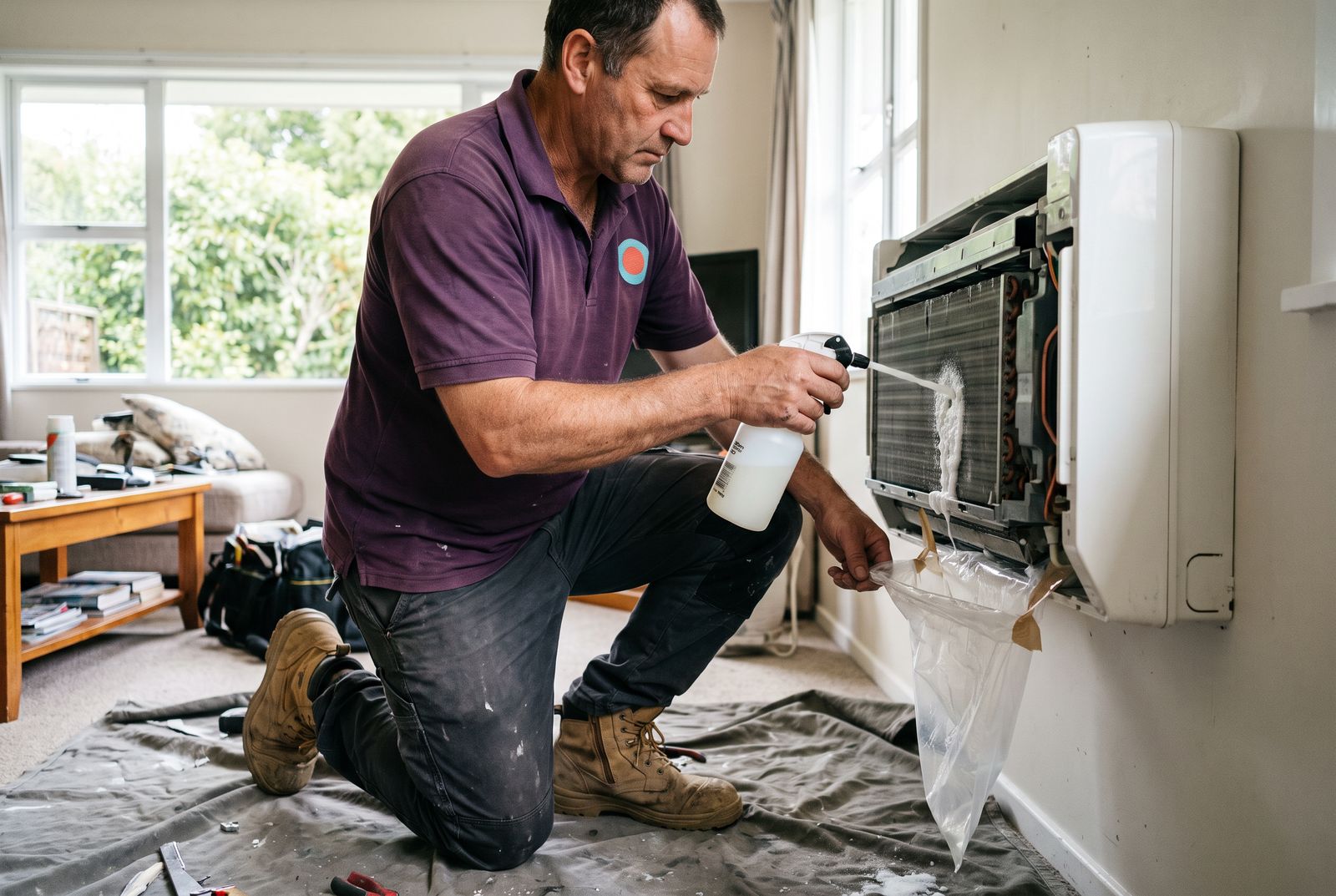 Heat Pump CleaningA deep clean of the coil, fan and drain that removes the mould and grime a filter wash cannot reach.
Read Next

Heat Pump Not Heating? Common Causes and Fixes
A heat pump that is not heating is most often on the wrong mode, choked by dirty filters, or in a normal defrost cycle t...
Read article
How to Clean Your Heat Pump Filter (and When to Call a Pro)
To clean a heat pump filter, switch the unit off, lift the front panel, slide the filters out, vacuum them with a soft b...
Read article
What Size Heat Pump Do I Need? kW by Room for NZ Homes
Most bedrooms need a heat pump of about 2 to 3 kW, a typical lounge 3.5 to 5 kW and a large open-plan living area 6 kW o...
Read article