
A portable air conditioner is the quick fix for a hot bedroom or home office: no installer, no holes in the wall, and you can take it with you when you move. That convenience is real, and for some households it is the right answer.
This guide is written for shoppers. It explains the main types, how to size one, what it costs to run, why the hose matters so much, and the point at which a fixed heat pump or air conditioner earns its higher upfront price.
Do portable air conditioners actually work?
Yes, a portable air conditioner will lower the temperature of a small, closed room, but it works harder for the same result than a fixed system. The refrigeration parts are the same as any air conditioner. The problem is that the hot side and the cold side sit in the same box, inside the room you are trying to cool.
That design costs you in three ways. Heat from the compressor and the warm exhaust hose leaks back into the room. Air you push out of the window has to be replaced, and it is replaced by warm air from outside or the rest of the house. And the compressor noise is right there with you, not outside on a wall bracket.
Consumer NZ's air conditioner testing puts it plainly: compared with portable air conditioners, split system heat pumps are much quieter and more efficient. MBIE's 2020 regulatory impact summary on air conditioners went further, noting that portable units did not need an energy rating label at the time, so buyers could not easily see how inefficient they are compared with other types.
- Single-hose units: the most common and cheapest type. They exhaust room air out the window, which pulls warm replacement air in through gaps.
- Dual-hose units: one hose draws outside air to cool the hot side, the other sends it back out, so less warm air is sucked into the room.
- Evaporative coolers: often sold next to portable air conditioners, but they cool by adding moisture to the air. In Auckland's humid summers that tends to make a room feel muggier, not cooler.
How much does a portable air conditioner cost to run?
A portable air conditioner usually costs somewhere in the tens of cents per hour to run, and more than a split system of the same cooling capacity. The exact figure depends on its power draw and your electricity unit price.
Consumer NZ's method for working out cooling costs is simple: divide the cooling capacity by the EER (the cooling efficiency figure), then multiply by your unit price. If you do not know your unit price, Consumer suggests using 29 cents per kWh as an average. Consumer also says an EER of 3 or more indicates energy-efficient cooling.
As a worked example only, a portable unit rated at 3 kW of cooling with an EER of 2.5 draws about 1.2 kW, which is roughly 35 cents an hour at 29 cents per kWh. A split system with the same capacity and an EER of 4 would draw about 0.75 kW, or roughly 22 cents. Check the real figures on the spec sheet before you buy, because portable units often do not show them on a label.
| Typical unit (3 kW cooling) | EER | Power drawn | Cost per hour at 29c/kWh |
|---|---|---|---|
| Portable air conditioner (illustrative) | 2.5 | About 1.2 kW | About 35c |
| Split system heat pump (illustrative) | 4 | About 0.75 kW | About 22c |
Why does a portable air conditioner need a hose out the window?
Every air conditioner moves heat from inside to outside, and on a portable unit the hose is the only way that heat leaves the room. Without it, the unit would heat the room it is meant to cool.
The window kit matters more than most buyers expect. A sliding window kit that leaves gaps lets warm air straight back in, and on many Auckland homes with casement or sash windows the supplied kit does not fit well at all. Keep the hose as short and straight as the instructions allow, because a long, kinked hose gets hot and radiates that heat back into the room.
Portable units also remove moisture as they cool. Some evaporate it through the exhaust, others collect it in a tank you need to empty. In a humid Auckland bedroom, check how big that tank is and whether the unit can drain through a hose instead.
Not sure a portable will cope?
Cheeky's Heat Pumps will look at the room and tell you straight whether a portable unit is enough or a split system is worth it.
What is the best portable aircon for a bedroom?
The best portable aircon for a bedroom is a dual-hose unit sized for the floor area, with a published noise figure low enough to sleep with and a sealed window kit that fits your window. Bigger is not better in a small room, because an oversized unit cycles on and off and makes more noise.
Use this checklist when comparing models:
- Cooling capacity in kW matched to the room size, using the manufacturer's room guide as a starting point.
- The EER or energy use figure on the spec sheet, so you can work out the running cost.
- A sleep or night mode and a stated noise level in decibels.
- A window kit that suits your window type, or the option to buy a better one.
- How the unit handles water: auto-evaporation, a drain hose or a tank you empty by hand.
Portable aircon vs a split system heat pump: which is better?
For anything beyond one room for a few weeks a year, a split system heat pump is better: it is quieter, cheaper to run and it heats in winter as well. A portable unit wins only on upfront price, portability and the fact that it needs no installation.
A split system puts the noisy compressor outside and moves heat through sealed refrigerant pipes, so there is no hose and no gap in the window. Consumer NZ notes that a reverse-cycle heat pump is the only home heating system that can both heat and cool a room. That matters in Auckland, where the same bedroom that is too hot in February is often cold and damp in July.
| Portable air conditioner | Split system heat pump | |
|---|---|---|
| Upfront cost | Lower, no installer | Higher, needs professional install |
| Noise in the room | Compressor inside the room | Compressor outside |
| Efficiency | Lower, warm air leaks back in | Higher, sealed system |
| Winter heating | Usually none | Yes, reverse cycle |
| Moving house | Take it with you | Stays with the home |
When is a fixed heat pump the smarter buy?
A fixed heat pump is the smarter buy when you need cooling every summer, want winter heating from the same unit, or need to cool a living area rather than one bedroom. It also makes sense where noise matters, such as a bedroom or a home office used for calls.
Placement is where a fixed system needs more thought. In Ponsonby, many villas sit on narrow sections, so the outdoor unit has to be kept off tight side boundaries, where Auckland Council noise limits are measured. In New Lynn, newer apartments and townhouses put outdoor units close to neighbours, and body corporate approval is often needed. A portable unit avoids those questions, which is one reason renters and apartment owners choose them.
If you are weighing it up, a high wall heat pump is the most common choice for a single bedroom or lounge, and air conditioning installation for a home office follows the same process. Our guide to the heat pump vs air conditioner question explains the naming confusion if you are comparing quotes.
Talk to a local installer before you decide
If you are not sure whether a portable unit will do the job, a quick look at the room usually settles it. Cheeky's Heat Pumps can measure the space, check where an outdoor unit could go and tell you honestly if a portable is enough.
When a fixed system is the better answer, Cheeky's Heat Pumps sizes it for both summer cooling and winter heating, and explains the running cost before you commit. You can book a free in-home assessment online and choose a time that suits.
Frequently Asked Questions
Can I use a portable air conditioner without venting it out a window?
No. Without the exhaust hose vented outside, the unit dumps its heat back into the room and you get little or no cooling. Some people vent through a sliding door or a purpose-made wall vent instead of a window, but the hot air must leave the room.
Do portable air conditioners also heat?
Some models include a heating mode, but many are cooling only. A portable heating mode is usually less efficient than a split system heat pump, which Consumer NZ notes is the only home heating system that can both heat and cool a room.
Is a portable air conditioner a dehumidifier?
It removes some moisture as it cools, because water condenses on the cold coil. It is not a substitute for a dedicated dehumidifier or ventilation if your home has a damp problem, and in winter you do not want cooling running just to dry the air.
Can a renter install a split system heat pump?
A fixed heat pump is a change to the property, so a tenant needs the landlord's agreement first. That is one reason portable units are popular with renters. Landlords sometimes agree because a heat pump can help with heating obligations.
How long does it take to install a split system instead?
A straightforward back-to-back high wall install is usually done in a day. Longer pipe runs, apartments and units that need a bracket at height take more planning, which is why an in-home look comes before a firm quote.
Our Services
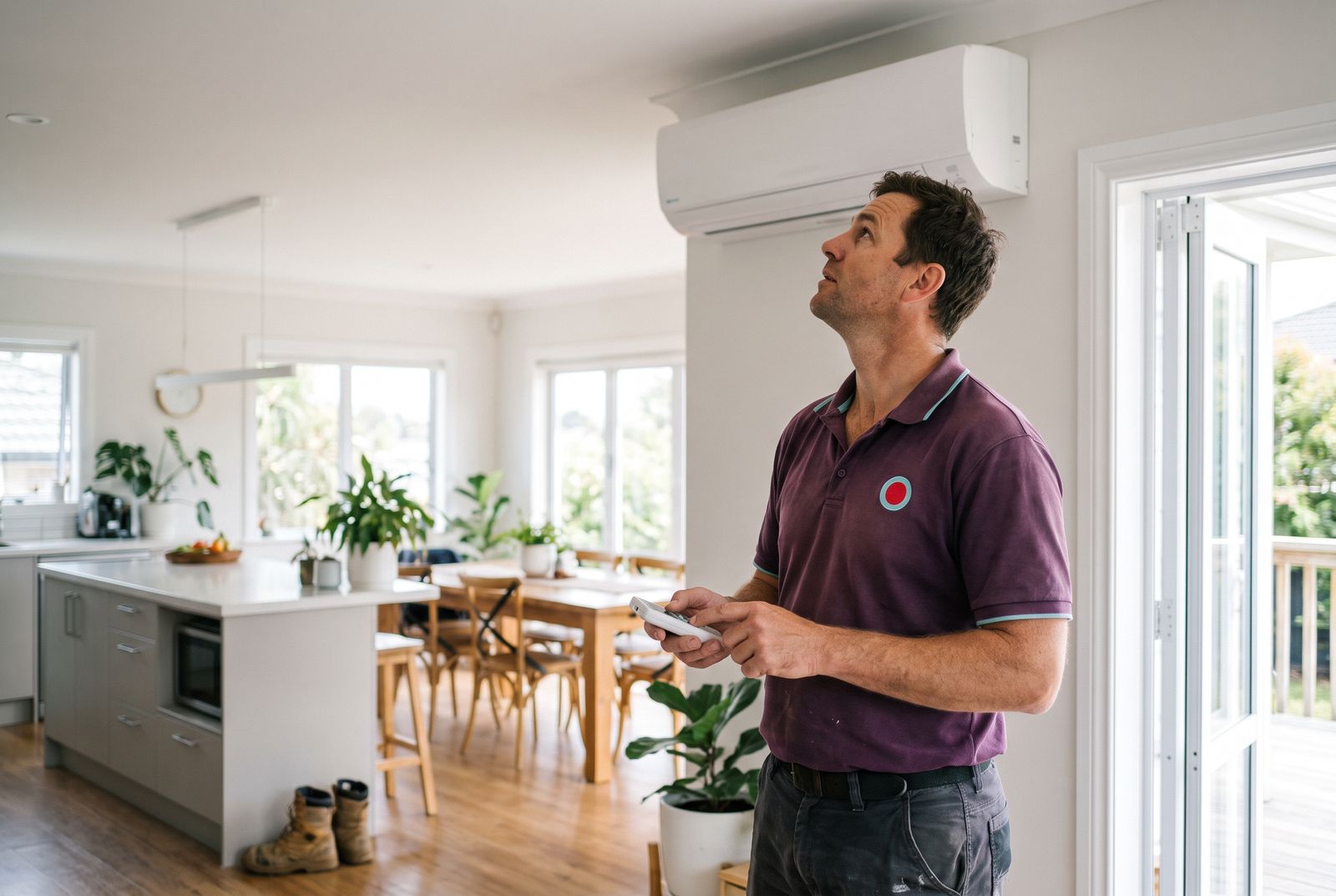 High Wall Heat PumpsThe most popular heat pump in New Zealand homes: efficient, quiet and quick to install in a lounge or bedroom.
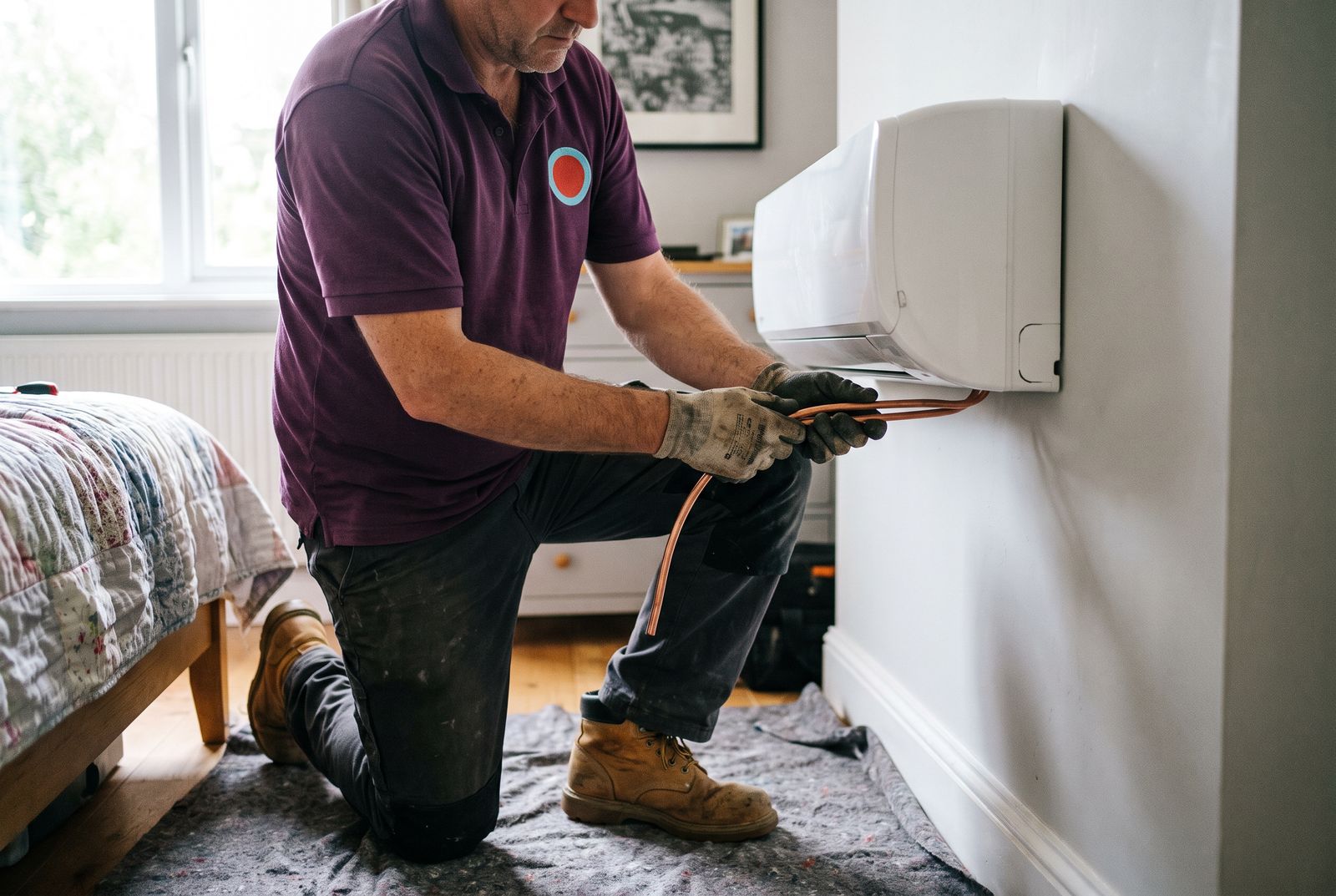 Heat Pump InstallationHeat pumps supplied and installed by our own team, sized to the room and placed where they heat and cool evenly.
Read Next
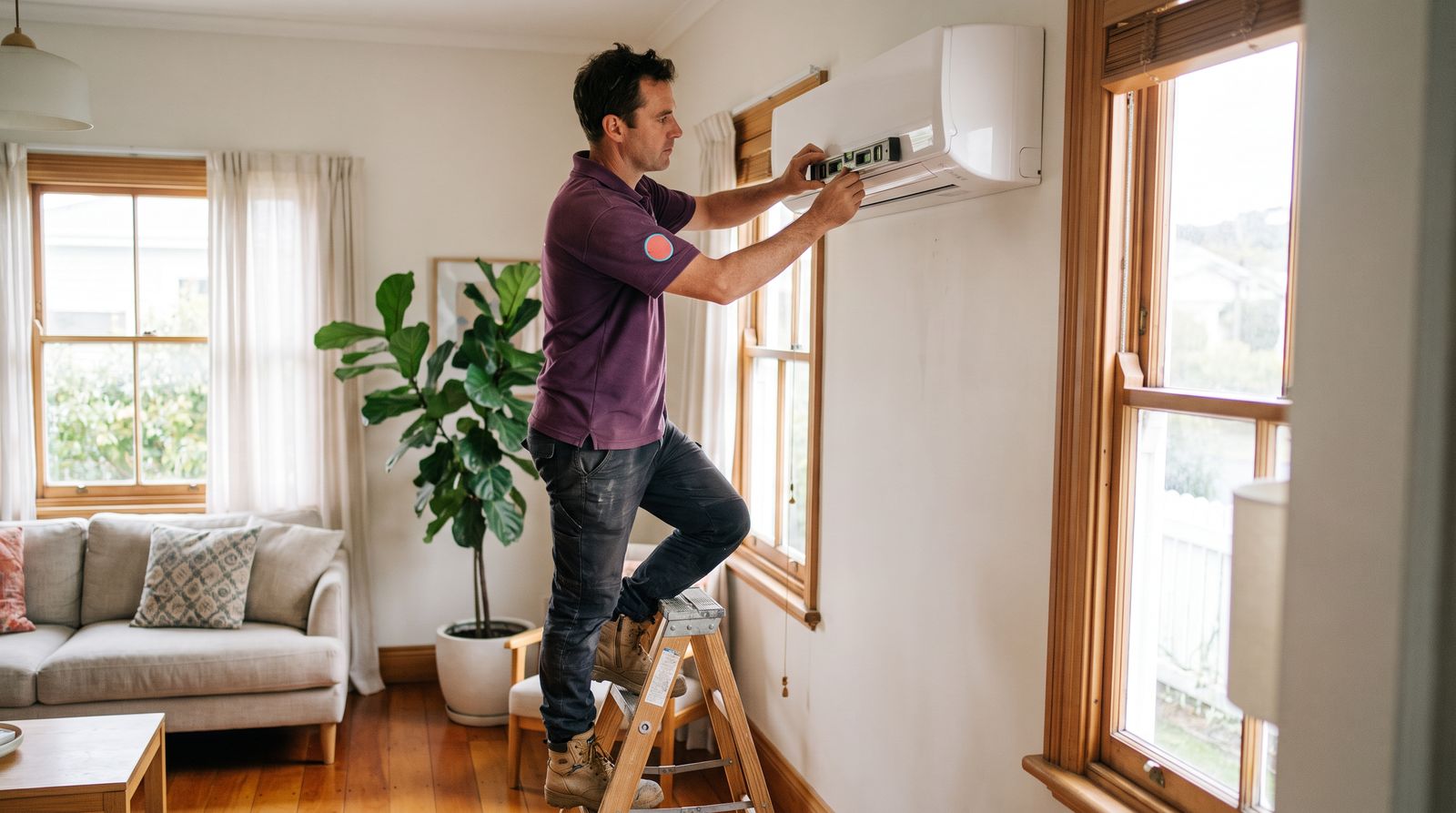
Heat Pump vs Air Conditioner: What Is the Difference in NZ?
In New Zealand, a heat pump and an air conditioner are usually the same machine: a reverse-cycle split system that heats...
Read article
How Much Does a Heat Pump Cost to Run in NZ?
A typical NZ heat pump costs roughly 15 to 75 cents an hour to run at full output, depending on its size and efficiency,...
Read article
Best Heat Pump in NZ: How to Choose the Right One
The best heat pump for a NZ home is the one sized correctly for the room, that still delivers its rated heat when it is ...
Read article