
Search for the best heat pump in NZ and you mostly find brand advertising. The honest answer is that the major brands sold here all make good units and less good units, and the differences that show up in your power bill and your sleep come from size, placement and the specific model, not the logo.
This guide shows you how to choose on the things that matter: capacity at cold temperatures, the energy label, noise, reliability data, price and lifespan. It will not name a winner, because a lounge shaded by Mt Eden's big established trees needs a different unit from a sunny, well-insulated new-build living area.
What is the best heat pump for a NZ home?
The best heat pump is the right type and size for each room. Get those two decisions right and almost any reputable model will perform well; get them wrong and none will.
For most lounges and bedrooms that means a high wall unit, which EECA describes as the most commonly installed residential heat pump in NZ. Rooms with big windows, no wall space or a bay window often suit floor console heat pumps, which EECA's installer guide notes are primarily designed for heating because warm air released low down rises through the room. Whole-house comfort with nothing on the walls points to a ducted system, and several rooms with limited outdoor space can suit a multi-split.
Size comes next. Consumer NZ calls heating capacity the most important specification: an undersized unit struggles on cold nights, and an oversized one wastes energy, cycles on and off and costs more to buy.
Which heat pump brand is most reliable?
No brand is reliable across every model, so check independent data rather than adverts. Consumer NZ runs owner reliability surveys and lab tests heat pumps sold in NZ, and its member results are the best independent check available.
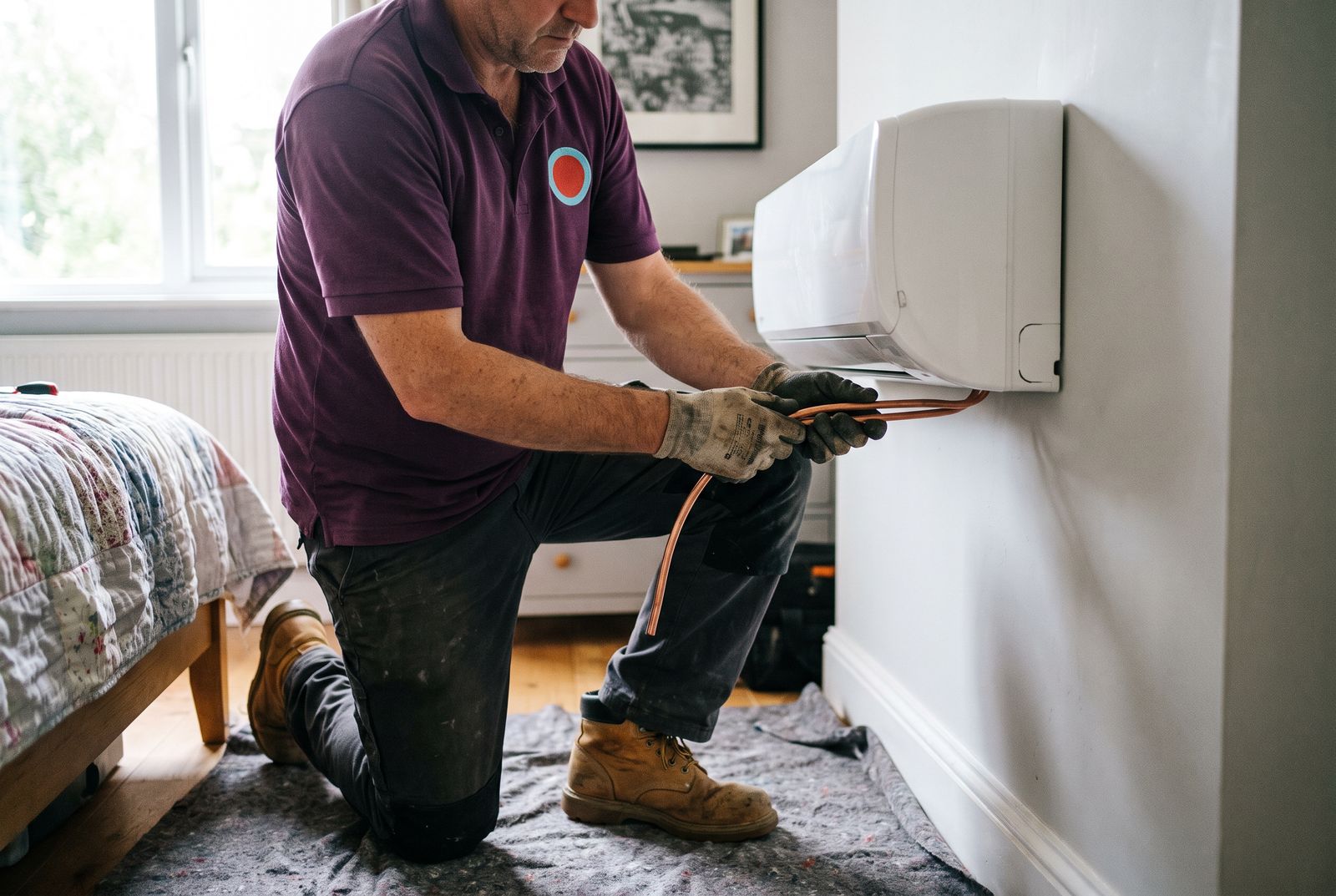
Beyond the survey data, reliability in real life depends heavily on installation and servicing. A unit with a kinked pipe, a poor vacuum before the refrigerant is released or a drain that falls the wrong way will fail early whatever the badge says. Ask who will service the unit, whether parts are stocked in Auckland, and how long the installer has been dealing with that brand.
Warranty terms are a useful signal. Consumer NZ says most manufacturers offer five years parts and labour, and some conditions depend on who installs or services the unit, so read the warranty document before you buy.
What is the quietest heat pump for a bedroom?
The quietest bedroom heat pump is one with a low published indoor noise figure on its lowest fan speed, a quiet or night mode, and an outdoor unit placed away from bedroom windows. Placement matters as much as the model.
Compare the indoor noise in dBA on the energy label where the supplier provides it, at the lowest fan setting. Consumer NZ lists noise as one of the most common buying mistakes: a loud indoor fan has you turning up the TV, and a loud outdoor unit can annoy you and your neighbours at night. Outdoor noise is also a council issue. EECA's guide says not to install outdoor units under or close to bedroom windows, and Auckland Council noise limits are measured at the boundary.
A slightly larger unit running at low speed is often quieter than a small one running flat out, which is one reason quiet bedroom models are sized with a little headroom rather than to the bare minimum.
Want a shortlist for your rooms?
Cheeky's Heat Pumps measures the rooms, checks the cold-weather output you need and recommends the right type and size before brand comes up.
What do the energy star ratings mean?
Since 1 July 2021, new residential heat pumps sold in NZ carry the Zoned Energy Rating Label, which rates heating and cooling separately out of 10 stars for three climate zones. More stars means more efficient, but only compare models of similar capacity.
The label also shows each model's estimated annual energy use in kWh, its heating output at 7 degrees and at 2 degrees outside, and noise where supplied. Consumer NZ suggests looking for a model whose heating output at 2 degrees is close to its output at 7 degrees, because that is the unit that keeps up on frosty mornings. We go through the label line by line in our best heat pumps guide.
| Label item | What to look for |
|---|---|
| Heating stars (cold zone row) | More stars among models of similar capacity |
| Annual energy use (kWh) | Lower number, lower running cost |
| Heating output at 2 degrees | Close to the 7 degree figure |
| Indoor and outdoor noise (dBA) | Lower figures for bedrooms and tight boundaries |
Is the cheapest heat pump a false economy?
Often, yes. A budget unit can cost more over its life if it loses output in cold weather, runs louder, uses more power or has a shorter warranty.
Running costs add up over a decade. Consumer NZ estimates a small 2.5 kW unit can cost under $200 a year to run and a 10 kW or larger unit about $1,000, so a few percent of efficiency matters on a big unit used every day. The Gen Less Efficient Appliance Calculator lets you compare running costs for specific models.
Cold-weather output is where cheap units most often fall short. EECA's installer guide tells installers to size for the capacity a unit delivers at the local design temperature, which it lists as 1 degree for the Auckland Council area. That matters more in inland spots such as Pukekohe, where rural valleys can be colder on still winter nights than the coastal suburbs.
How long do heat pumps last?
A well-installed heat pump typically lasts 10 to 15 years. Consumer NZ puts life expectancy at 10 to 15 years and EECA lists around 15 years.
Servicing, use and location all move that figure. A unit that has its filters cleaned and a regular service will usually outlast one that is ignored, and outdoor units near the sea corrode faster. Consumer NZ says warranties should cover corrosion in seaside areas and suggests asking about cover before installing near the coast, which is worth doing in Remuera homes near Hobson Bay.
When an older unit develops a major fault, Consumer NZ suggests it may not be worth repairing if it is more than seven years old. That is the point to compare a repair quote against heat pump replacement with a modern, more efficient model.
Should a heat pump installer choose the model for you?
A good installer should recommend a shortlist and explain why, but you should still check the label and the warranty yourself. The recommendation is only as good as the measurements behind it.
Cheeky's Heat Pumps measures each room, notes the glazing, ceiling height and which way it faces, then recommends a capacity and a unit type before talking brands. If you want to see the numbers for your own home, you can book a free assessment and compare our recommendation with anyone else's. Cheeky's Heat Pumps writes the sizing basis on every quote, so the advice is easy to check.
Frequently Asked Questions
Is an inverter heat pump better?
Most heat pumps sold for NZ homes are inverter models, which vary their compressor speed rather than switching fully on and off. That makes them quieter and more efficient at part load. If you are offered a fixed-speed unit for a home, ask why, and compare the energy label carefully.
Do I need wifi control on my heat pump?
It is optional but useful. Consumer NZ recommends wifi control if the upgrade is not too expensive, because you can use timers and switch the heat pump on from your phone before you get home. It also helps landlords and people who forget to turn it off.
Is a bigger heat pump always better?
No. EECA's installer guide says a slightly larger unit gives a safety margin, but a significantly oversized unit cycles on and off, wastes power, creates draughts and is noisier. A correctly sized unit, chosen on its output at cold temperatures, gives the best comfort and running cost.
Are heat pumps good for cooling in Auckland summers?
Yes. Most heat pumps sold in NZ are reverse cycle, so the same unit cools in summer. Check the cooling stars on the energy label if you will use it a lot in summer. High wall units tend to cool more evenly than floor units because cool air drops as it mixes.
Does the brand affect resale value of my house?
Not in any measurable way we can source. Buyers notice whether heating is fixed, efficient and working, and whether the unit is old and noisy. A tidy install with documentation and a service history is more persuasive than any particular logo.
Our Services
 High Wall Heat PumpsThe most popular heat pump in New Zealand homes: efficient, quiet and quick to install in a lounge or bedroom.
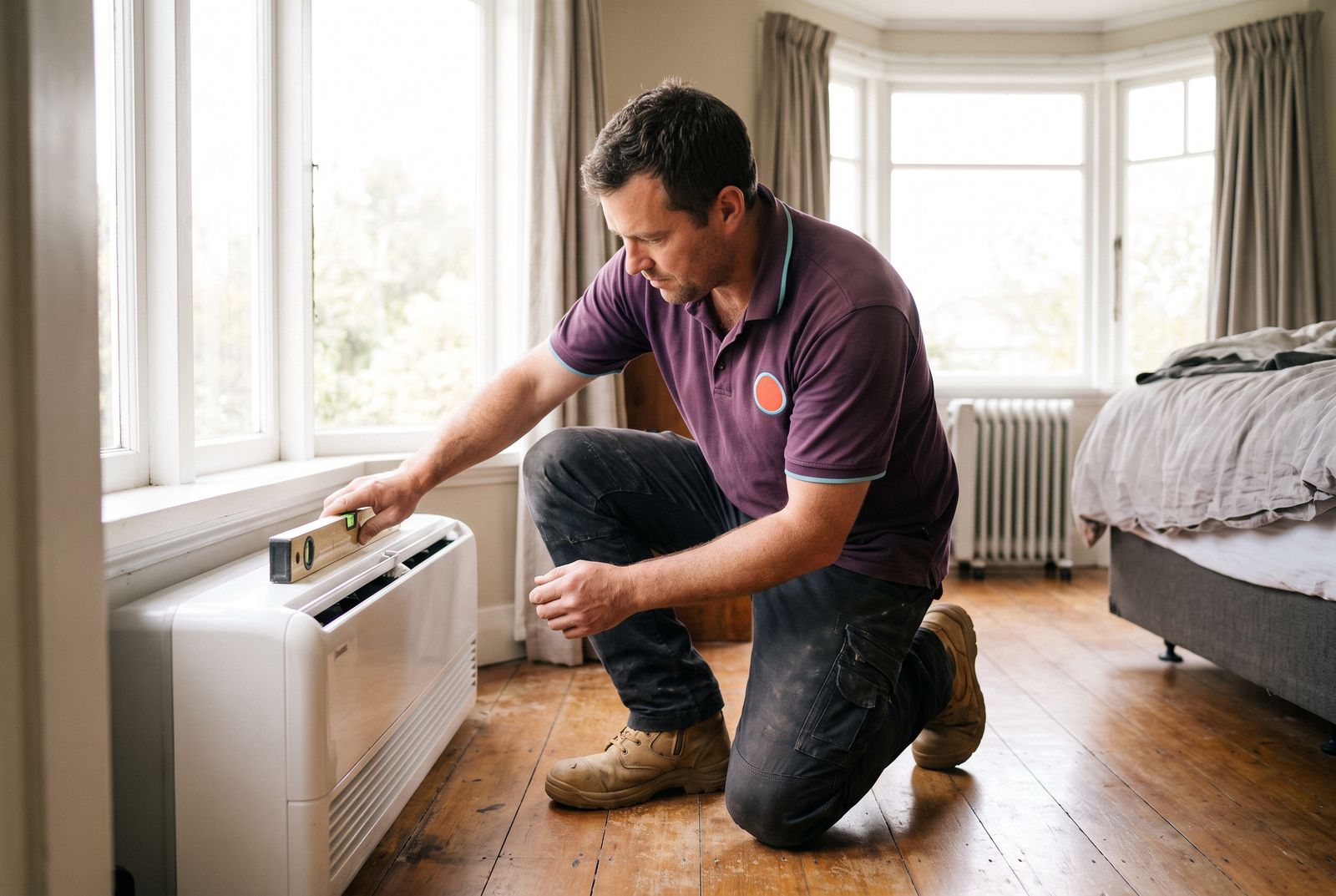 Floor Console Heat PumpsLow-mounted heat pumps for rooms with big windows or no wall space, with gentle heat at floor level.
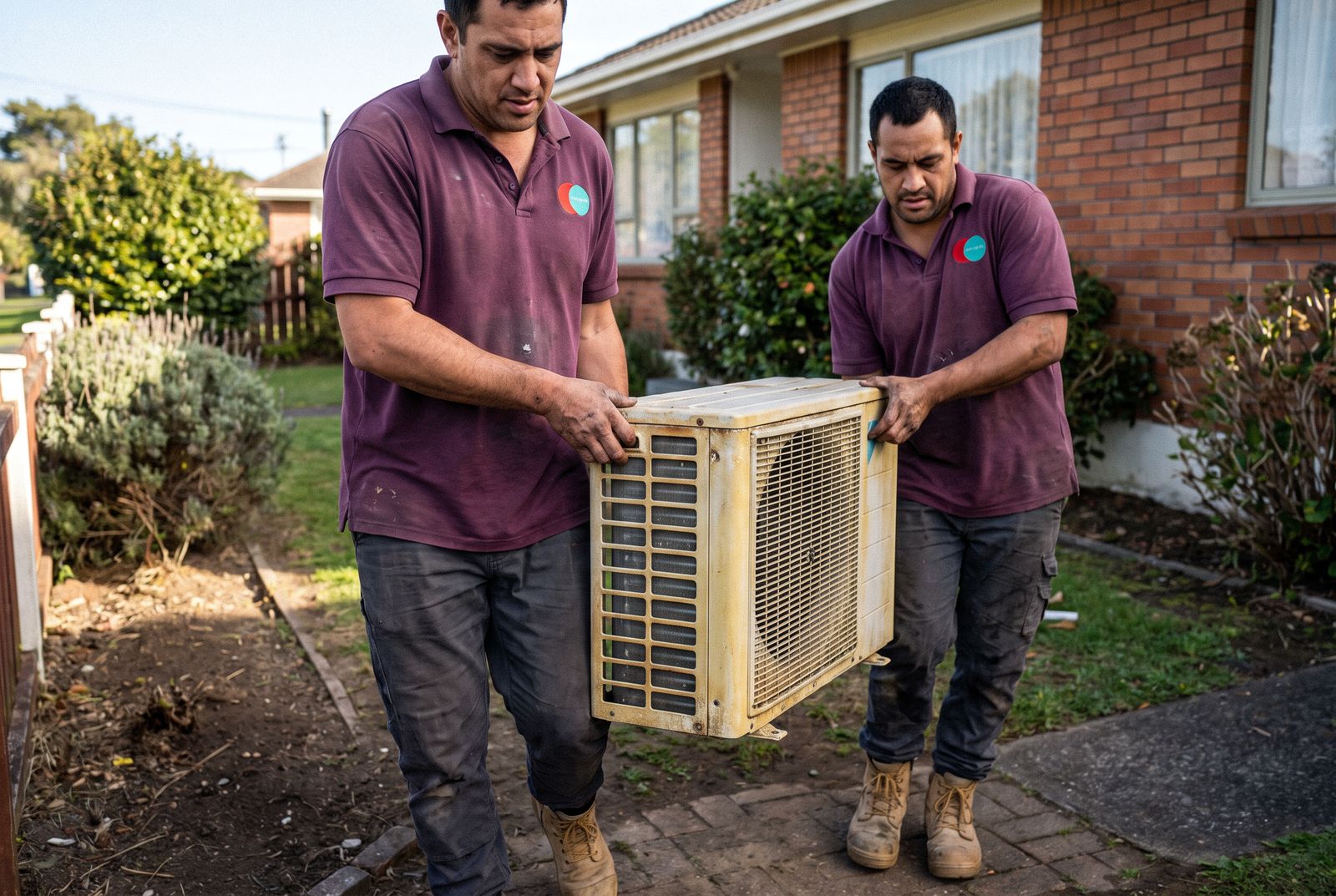 Heat Pump ReplacementSwap an old, noisy or inefficient heat pump for a modern inverter model, reusing pipework where it is sound.
Read Next

What Size Heat Pump Do I Need? kW by Room for NZ Homes
Most bedrooms need a heat pump of about 2 to 3 kW, a typical lounge 3.5 to 5 kW and a large open-plan living area 6 kW o...
Read article
How Much Does a Heat Pump Cost to Install in NZ? (2026)
Rinnai's NZ guide puts a high wall heat pump at $2,000 to $4,000 including installation, and a ducted whole-home system ...
Read article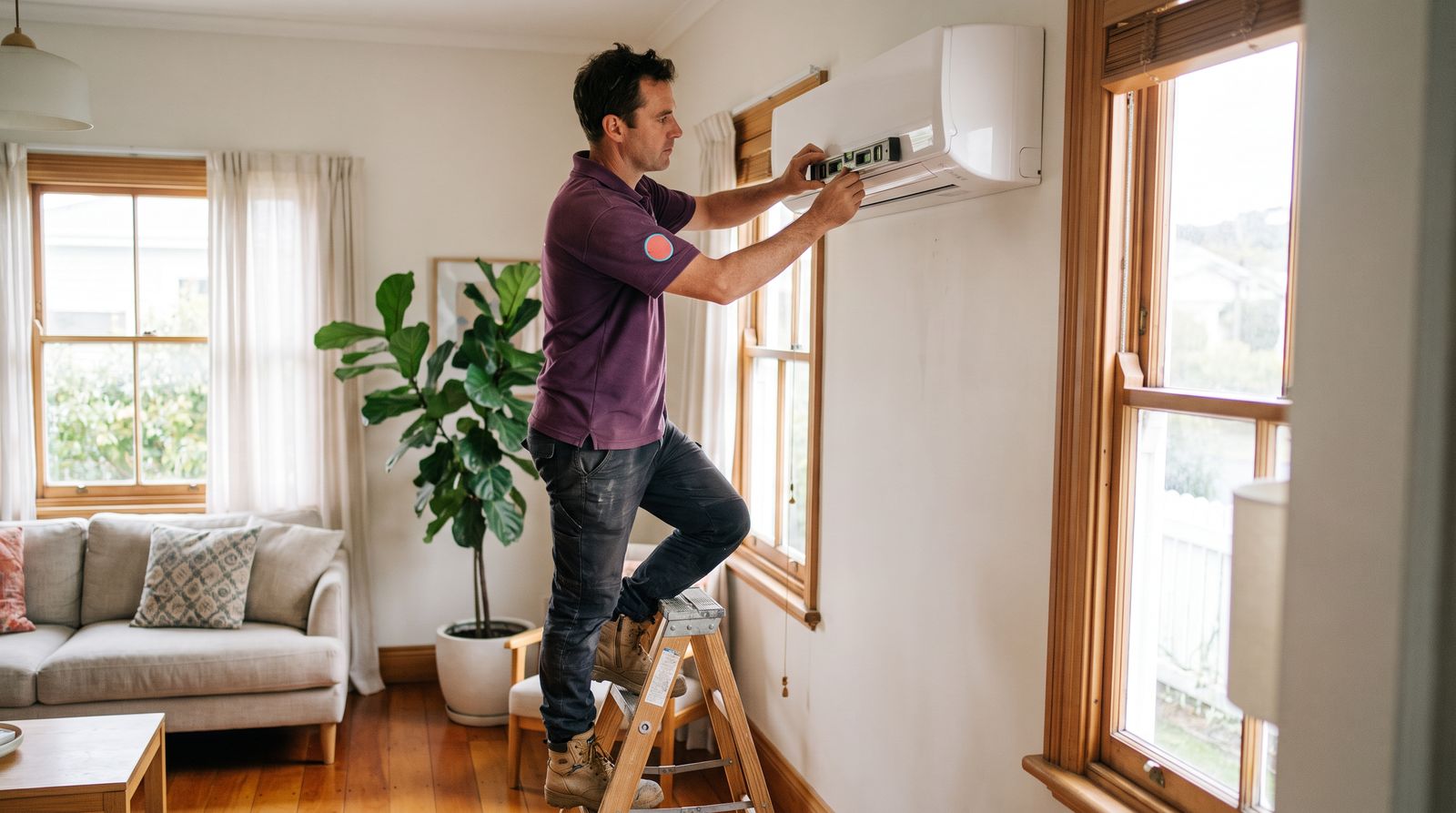
Ducted Heat Pump Cost in NZ: Price, Running Costs and Zones
A ducted heat pump typically costs around $8,000 to $15,000 installed according to Rinnai's NZ guide, while Sustainabili...
Read article